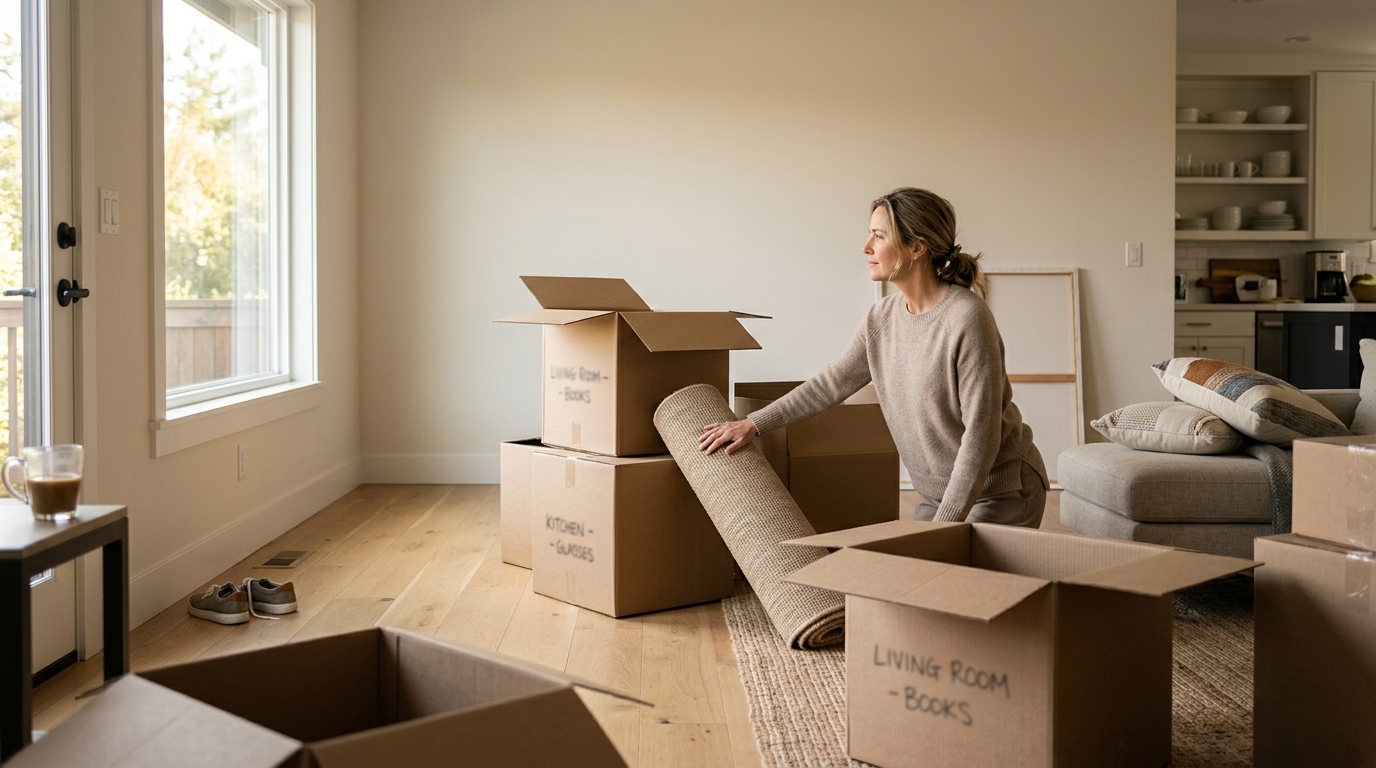
For most families, a hybrid approach that prioritizes essential rooms first and redesigns secondary spaces later is the most effective strategy. GGG Organizing in San Mateo, CA, helps families navigate this transition by managing the logistics of moving and developing new organizational systems. This guide covers phased unpacking strategies, room prioritization, and the optimal timing for gradual space redesign to ensure a smooth and pleasant home transition.
Phased Unpacking Strategy
Phased unpacking is a methodical process where items are unpacked in specific stages rather than all at once. This approach prevents the overwhelming feeling of chaos that often accompanies a move. It allows families to establish a functional baseline before tackling decorative or non-essential items.
Phase One: The First 48 Hours
The initial phase focuses on immediate survival needs. Families should unpack toiletries, bedding, cooking utensils, and basic clothing. This ensures that the home is habitable by the end of the first day. GGG Organizing assists clients with organized packing, which makes this phase significantly faster because items are labeled and sorted by room and usage frequency.
Phase Two: The First Week
During the first week, the focus shifts to daily routines. Unpack work supplies, school materials, and frequently used kitchenware. This phase establishes the rhythm of daily life. By keeping non-essential boxes sealed, the visual clutter remains low, which reduces stress for children and adults alike.
Phase Three: The First Month
The final phase involves unpacking seasonal items, hobbies, and decorative pieces. This is also the time to assess what is truly needed. Items that remain in boxes for a month are often candidates for donation or sale. This natural decluttering process helps families change old habits and transform their living environments into efficient spaces.
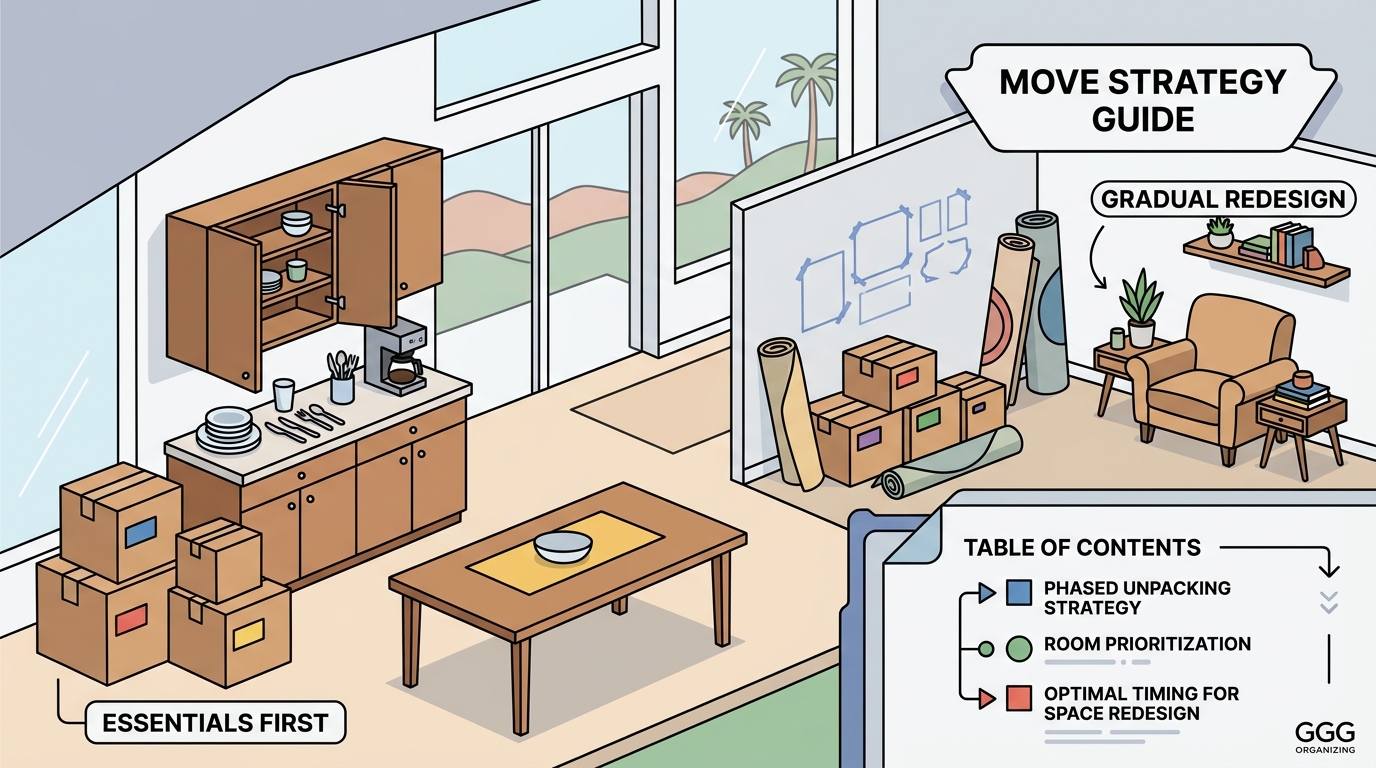
Essential Room Prioritization
Essential room prioritization is the practice of focusing organizational efforts on high-traffic, high-utility areas before addressing storage or guest spaces. This strategy ensures that the family can function normally while the move settles.
Bedrooms and Bathrooms
These rooms require immediate attention to ensure rest and hygiene. Unpacking these spaces first allows family members to sleep and prepare for the next day without disruption. A well-organized bedroom also serves as a mental anchor during the transition period.
Kitchen and Dining Area
The kitchen is the heart of the home and requires the most logistical planning. Families should unpack appliances, cookware, and pantry staples first. GGG Organizing specializes in re-designing spaces, which can help optimize kitchen layouts for better workflow and storage efficiency. This is particularly important for families with young children who need quick access to snacks and supplies.
Living and Work Areas
Living rooms and home offices should be prioritized based on the family's lifestyle. If parents work from home, the office setup is critical. If the family spends most of their time in the living room, that space should be comfortable and organized early on. Balancing these priorities prevents friction within the household during the first few weeks.
Gradual Redesign Timing
Gradual redesign timing is the strategic decision to wait until the initial unpacking is complete before making significant changes to room layouts or storage systems. This prevents the double work of moving items into temporary spots and then moving them again during a redesign.
Why Wait for Redesign?
Redesigning a space requires a clear understanding of how the family actually uses the room. This understanding only develops after a few weeks of living in the new space. Rushing a redesign can lead to inefficient layouts that do not match the family's real habits. Waiting allows for a more informed and effective transformation.
Identifying Redesign Opportunities
After the first month, families should observe pain points. Are items constantly falling out of drawers? Is the living room too crowded? These observations guide the redesign process. GGG Organizing helps clients develop new organizational systems that address these specific issues. This approach focuses on managing the logistics of moving to create a more efficient and pleasant home.
Implementing Changes
Once the redesign plan is established, changes should be implemented gradually. Start with one room at a time. This keeps the process manageable and allows the family to adjust to each new system before moving on to the next. This methodical approach ensures long-term success and sustainability of the new organizational habits.
Approach Comparison
The following table compares the two primary approaches to post-move organization. Understanding the differences helps families choose the strategy that best fits their timeline and resources.
| Initial Effort | High physical labor | High planning effort |
| Time to Functionality | Fast (1-3 days) | Slower (1-2 weeks) |
| Long-term Efficiency | Depends on existing habits | High (optimized for new space) |
| Stress Level | High initially, then low | Low initially, then high |
| Best For | Families with tight schedules | Families seeking long-term change |
Key Takeaways
- A hybrid approach that combines phased unpacking with gradual redesign is often the most effective strategy for families.
- Phased unpacking prevents overwhelm by focusing on immediate needs first and delaying non-essential items.
- Essential room prioritization ensures that high-utility areas like kitchens and bedrooms are functional quickly.
- Gradual redesign timing allows families to observe their actual habits before making permanent layout changes.
- Professional services like GGG Organizing can streamline the process by managing logistics and developing new systems.
- Decluttering prior to a move is crucial for reducing the volume of items that need to be unpacked and organized.
- Changing old habits is a key component of successful post-move organization and requires intentional effort.
- Senior living moves and estate clear-outs require specialized approaches that differ from standard family moves.
Frequently Asked Questions
How long should I wait before redesigning my new home?
It is generally recommended to wait at least one month before making significant redesign changes. This allows you to understand how you actually use the space. GGG Organizing can help assess your needs after this initial period.
What is the first room I should unpack?
The bathroom and bedroom are typically the first rooms to unpack. These spaces are essential for basic hygiene and rest. Ensuring these areas are functional helps reduce stress during the first few days.
Can I unpack and redesign at the same time?
It is not recommended to do both simultaneously. Unpacking is a physical task, while redesigning is a planning task. Combining them can lead to errors and inefficiencies. It is better to complete the unpacking phase before starting the redesign phase.
How does GGG Organizing help with senior moves?
Should I declutter before or after the move?
What is the benefit of phased unpacking?
Phased unpacking reduces the immediate stress of a move by breaking the task into manageable stages. It allows you to focus on what is most important first, ensuring that your home is functional without being overwhelmed by the entire process at once.
How can I change my organizational habits after a move?
Changing habits requires intentional effort and new systems. GGG Organizing helps clients develop new organizational systems that fit their lifestyle. This approach focuses on creating a more efficient and pleasant home environment. Learn more: gggorganizing com.