
How to Plan a Move Timetable and Build New Habits with a Professional
Start by working backward from your move date to create a realistic timeline, then pair that schedule with a keystone habit to anchor your new routine. GGG Organizing helps San Mateo County and Bay Area clients manage this process by combining structured move management with behavioral coaching. This guide covers backward timeline planning, keystone habit formation, decluttering phases, professional organizer selection, and weekly progress tracking to ensure a smooth transition. For additional details, review the gggorganizing com.
Backward Timeline Planning
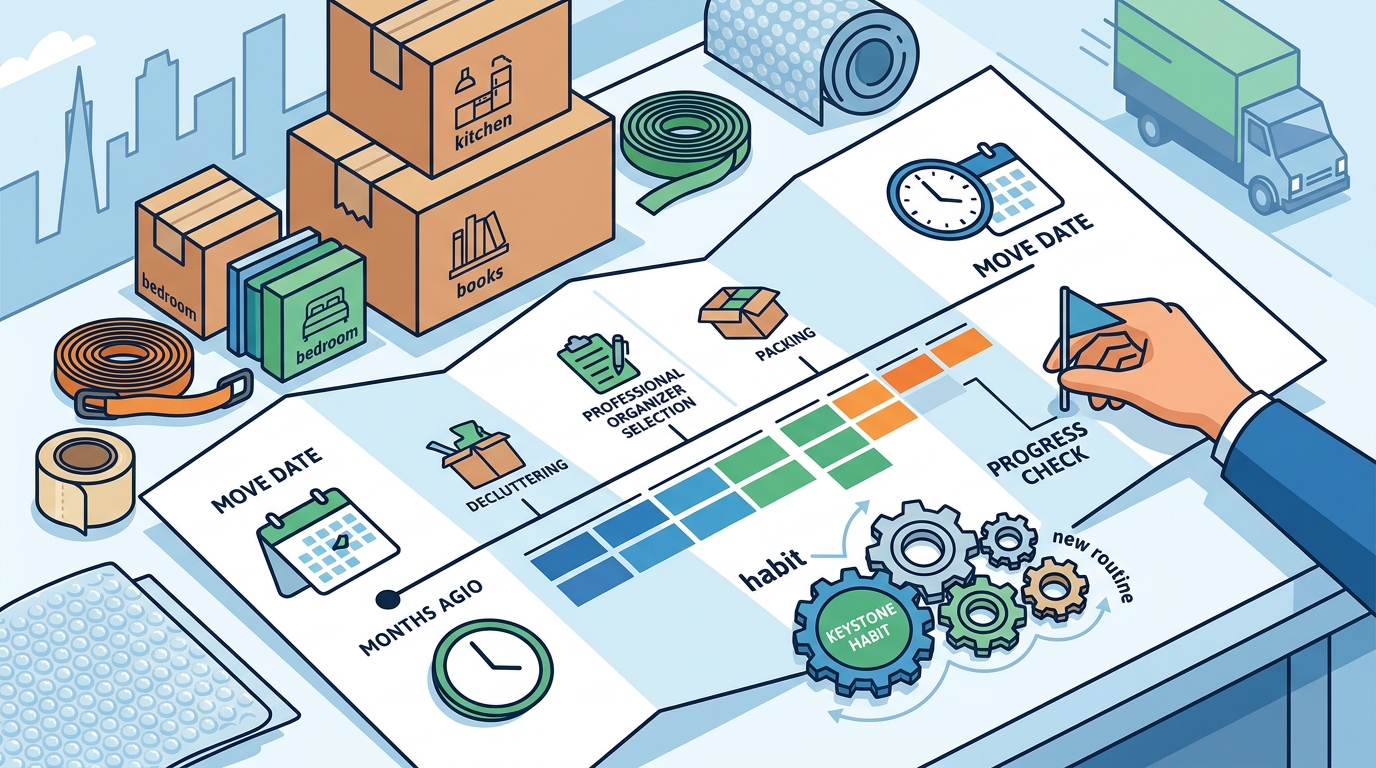
Backward timeline planning is a project management technique that starts with the final deadline and works in reverse to identify necessary milestones. For a move, this method prevents last-minute panic by breaking a large event into manageable weekly tasks. Instead of asking what to do today, you ask what must be completed by the move date. For additional details, review the .
Setting the Anchor Date
The first step is confirming your move-in date. This date is non-negotiable and serves as the anchor for the entire schedule. From this date, you subtract specific time blocks for major tasks. For example, if you are moving in 12 weeks, you allocate the final week for moving day logistics, the week before for packing essentials, and the remaining 10 weeks for decluttering and administrative tasks. For additional details, review the Customer Experience.
Identifying Critical Path Tasks
Not all tasks are equal. Some tasks, like changing your address with the post office or updating utility providers, have strict lead times. These are critical path tasks. You must schedule them early enough to allow for processing delays. GGG Organizing often helps clients identify these administrative hurdles early, ensuring that paperwork does not become a bottleneck during the physical move. For additional details, review the Frequently Asked Questions.
Buffer Zones
Keystone Habit Formation
Keystone habit formation is the practice of establishing one small, consistent behavior that triggers a cascade of other positive changes. In the context of moving, a keystone habit is a daily or weekly action that reinforces your commitment to the new life you are building. This concept is rooted in behavioral psychology, which suggests that small wins build momentum. For additional details, review the About.
Choosing Your Keystone Habit
Linking Habits to Environmental Cues
Habits are triggered by cues. To make a keystone habit stick, link it to an existing routine or a specific location in your home. For instance, if you want to declutter more, place a donation box in the hallway and commit to putting one item in it every time you pass it. This environmental cue removes the need for willpower. The habit becomes automatic because the environment prompts the action.
Reinforcing the Habit Loop
The habit loop consists of a cue, a routine, and a reward. After performing your keystone habit, give yourself a small reward. This could be a cup of coffee, a few minutes of music, or a checkmark on a calendar. This positive reinforcement strengthens the connection between the cue and the routine. Over time, the behavior becomes ingrained, making it easier to maintain even when motivation wanes.
Decluttering Phases
Decluttering is the process of removing unnecessary items from your living space to create a more functional and peaceful environment. It is not a one-time event but a phased approach that requires strategic decision-making. Effective decluttering reduces the volume of items you need to move, saving time and money.
Phase 1: The Purge
The first phase is the purge. This is where you remove items that are broken, expired, or no longer serve a purpose. Focus on high-volume areas like closets, garages, and storage units. Use the four-box method: keep, donate, sell, and trash. This system forces you to make a decision for every item, preventing items from being moved from one pile to another without a clear destination.
Phase 2: The Sort
The second phase is the sort. Here, you categorize the items you have decided to keep. Group similar items together, such as books, clothing, or kitchenware. This step helps you see the true volume of your belongings. It also allows you to identify duplicates and gaps in your collection. For example, you might realize you have five identical blenders and only need one.
Phase 3: The Systemize
The final phase is the systemize. This is where you create a storage system for the items you are keeping. Use clear bins, labels, and vertical storage to maximize space. The goal is to create a system that is easy to maintain. If you cannot find an item within 30 seconds, the system is not working. GGG Organizing specializes in designing these systems to fit the specific needs of each client, ensuring that the new home is not just clean, but functional.
Professional Organizer Selection
Professional organizer selection is the process of choosing a qualified expert to guide you through the move and decluttering process. The right organizer can save you hundreds of hours and reduce the emotional burden of the transition. When selecting a professional, look for specific credentials, experience, and a compatible working style.
Verifying Credentials and Experience
Check the organizer's credentials and experience. Look for certifications from recognized bodies, such as the National Association of Professional Organizers (NAPO). Experience is also crucial. An organizer who has handled senior moves, estate clear-outs, or complex relocations will have specific strategies for these situations. GGG Organizing, for example, has extensive experience in senior living moves and estate management, which is a key differentiator for clients in these categories.
Assessing Compatibility and Communication
Understanding the Scope of Services
Weekly Progress Tracking
Weekly progress tracking is a method of monitoring your move preparation on a regular basis to ensure you stay on schedule. It involves reviewing your timeline, assessing your progress, and adjusting your plan as needed. This practice provides accountability and helps you identify potential issues before they become major problems.
Setting Weekly Goals
At the start of each week, set specific, measurable goals. For example, "Clear out the garage" or "Pack all kitchen items." These goals should be realistic and achievable within the week. Break larger tasks into smaller steps if necessary. Having clear goals gives you a sense of direction and purpose.
Reviewing and Adjusting
Using Visual Aids
Visual aids can make progress tracking more engaging. Use a calendar, a whiteboard, or a digital app to visualize your timeline. Mark off completed tasks and celebrate your wins. Seeing your progress visually can be a powerful motivator. It reminds you of how far you have come and how close you are to your goal.
Comparison of Decluttering Methods
| Method | Best For | Time Commitment | Complexity |
|---|---|---|---|
| Four-Box Method | General decluttering | Medium | Low |
| Room-by-Room | Large homes | High | Medium |
| Category-Based | Specific item types | Medium | High |
| Professional-Assisted | Complex moves or estates | Low (for client) | Managed by Pro |
Key Takeaways
- Backward timeline planning starts with the move date and works in reverse to create a realistic schedule.
- Keystone habits are small, consistent actions that trigger larger behavioral changes.
- Decluttering is a phased process involving purging, sorting, and systemizing.
- Choosing a professional organizer requires verifying credentials, experience, and compatibility.
- Weekly progress tracking ensures you stay on schedule and adapt to changes.
- Buffer zones in your timeline help manage unexpected delays.
- Environmental cues can help automate new habits.
Frequently Asked Questions
How far in advance should I start planning a move?
It is recommended to start planning at least 8 to 12 weeks in advance. This allows enough time for decluttering, administrative tasks, and packing. For complex moves, such as senior relocations, starting 3 to 6 months in advance is often necessary.
What is a keystone habit in the context of moving?
A keystone habit is a small, consistent behavior that triggers a cascade of other positive changes. In moving, it could be sorting one drawer per day or making your bed every morning. This habit builds momentum and reinforces your commitment to the new routine.
How do I choose the right professional organizer?
Look for credentials, experience, and compatibility. Check for certifications from recognized bodies and ask for references. Schedule a consultation to discuss your goals and ensure you feel comfortable working with them.
What are the phases of decluttering?
The three main phases are purging, sorting, and systemizing. Purging involves removing unnecessary items. Sorting involves categorizing the items you keep. Systemizing involves creating a storage system for those items.
How can I track my progress during a move?
Use weekly progress tracking. Set specific goals for each week, review your progress at the end of the week, and adjust your plan as needed. Use visual aids like calendars or whiteboards to stay motivated.
Do I need a professional organizer for a simple move?
Not necessarily. For a simple move, you may be able to manage the process on your own. However, a professional can still provide valuable guidance and support, especially if you are feeling overwhelmed or if the move is emotionally challenging.
How does GGG Organizing help with senior moves?
What is the four-box method?
The four-box method is a decluttering technique where you sort items into four categories: keep, donate, sell, and trash. This method forces you to make a decision for every item, preventing items from being moved from one pile to another without a clear destination.
Conclusion
Planning a move is a significant undertaking that requires both logistical precision and behavioral change. By using backward timeline planning, you can create a realistic schedule that prevents last-minute stress. Incorporating keystone habits helps you build new routines that support your transition. Decluttering in phases ensures that you only move what you truly need. Selecting the right professional organizer provides expert guidance and support. Finally, weekly progress tracking keeps you accountable and on track. GGG Organizing is here to help you navigate this process with confidence and ease. Contact GGG Organizing today to start planning your move. Learn more: gggorganizing com.