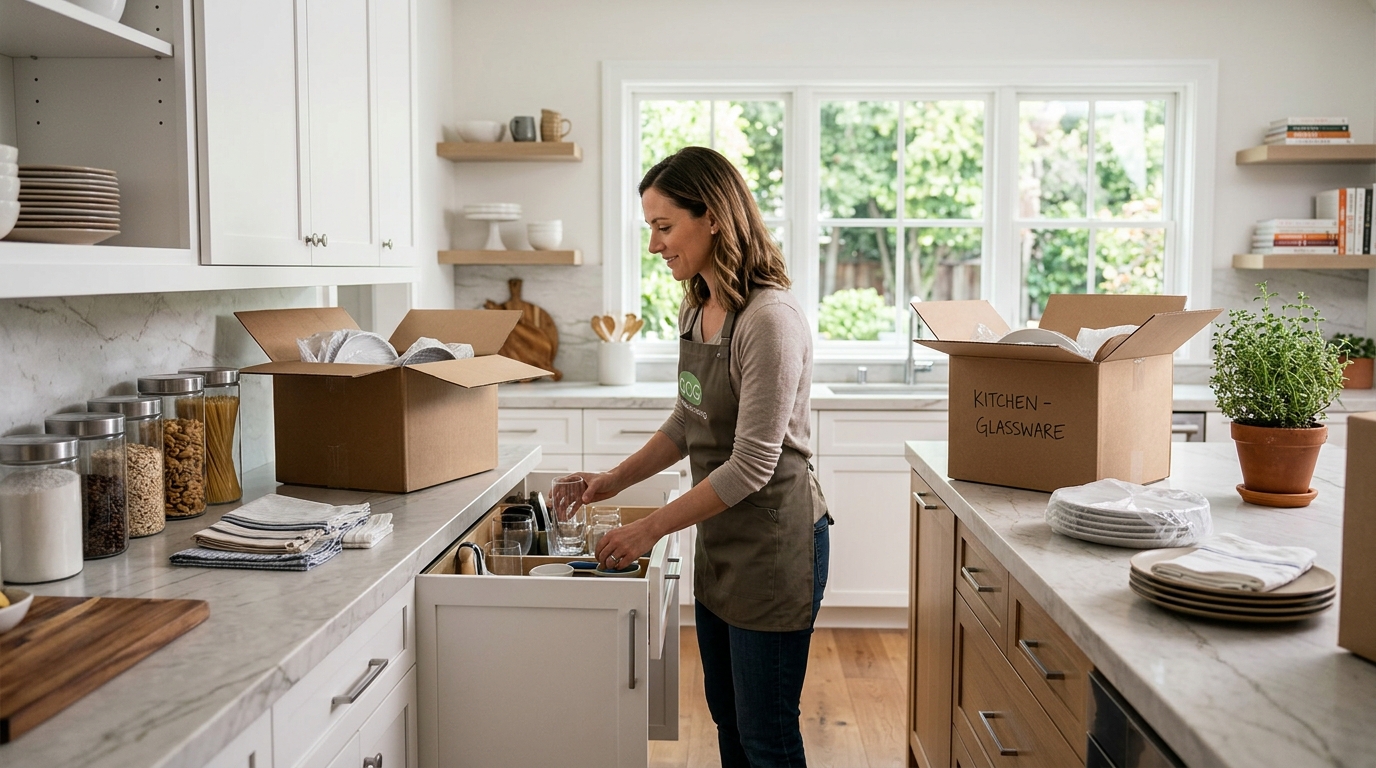
Ultimate Guide to Unpacking and Organizing Your Kitchen After a Move
Unpacking and organizing a kitchen after a move is a structured process that prioritizes daily essentials, establishes functional zones, and implements sustainable storage systems. GGG Organizing, a professional move management and organizing service based in San Mateo, California, helps families navigate this transition by transforming cluttered spaces into efficient, habit-friendly environments. This guide covers the critical steps for kitchen zone planning, unpacking essentials first, and designing cabinet organization systems that last. For additional details, review the GGG Organizing homepage.
Kitchen Zone Planning
Effective kitchen organization begins with strategic zone planning before a single box is opened. Kitchen zone planning is the practice of dividing a kitchen into distinct functional areas based on workflow and frequency of use. This approach minimizes movement and reduces friction during daily cooking and cleaning tasks. For additional details, review the GGG Organizing homepage.
Defining Functional Zones
Mapping Your Workflow
Essentials First Unpacking
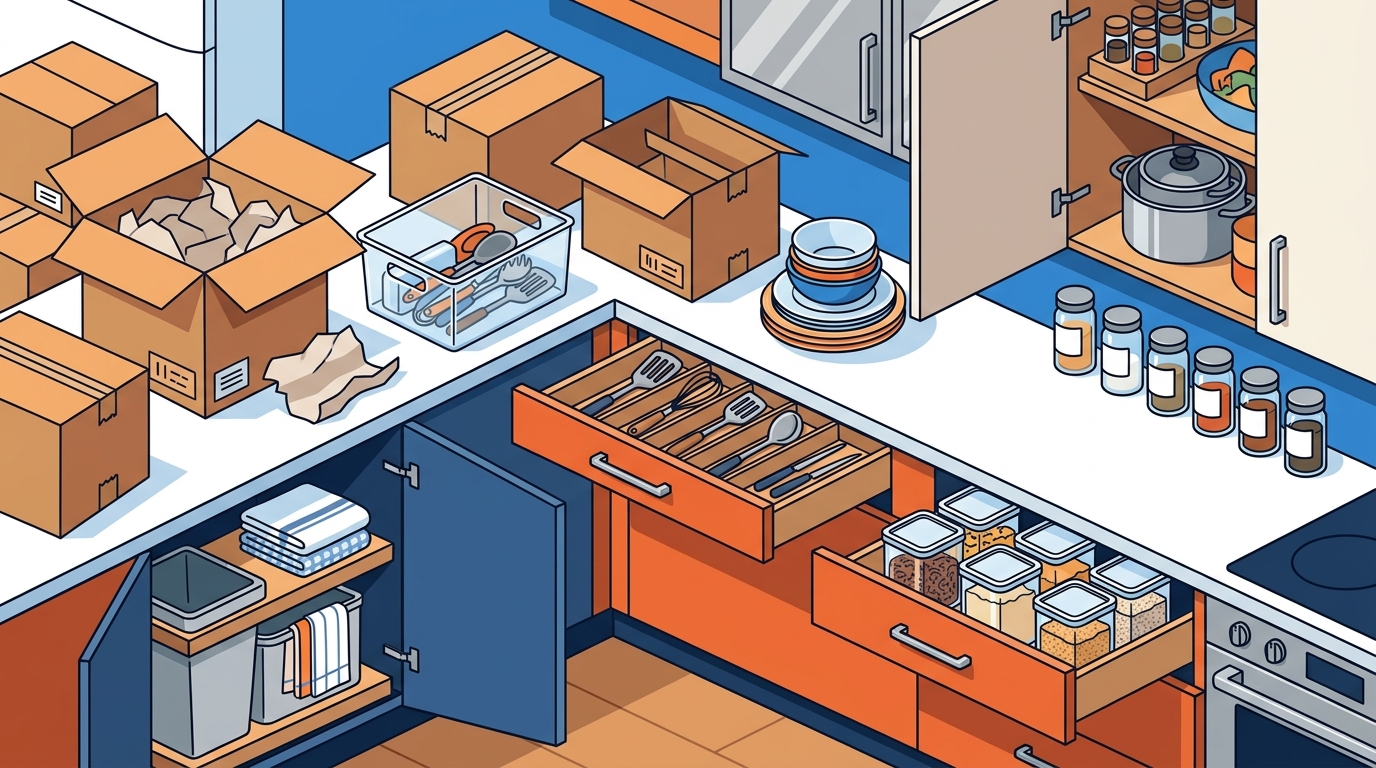
Unpacking everything at once leads to overwhelm and disorganization. The essentials-first method focuses on unpacking only the items needed for the first 48 to 72 hours. This strategy allows you to function in your new kitchen without being buried in boxes. For additional details, review the GGG Organizing homepage.
The 48-Hour Priority List
Managing the Decluttering Phase
Cabinet Organization Systems
Once essentials are unpacked, the focus shifts to organizing the remaining items within cabinets. Cabinet organization systems are structured methods for storing items to maximize space and accessibility. The goal is to make every item easy to see, reach, and put back. For additional details, review the GGG Organizing homepage.
Vertical and Horizontal Storage
Utilize vertical space with shelf risers and drawer dividers. Group similar items together, such as spices, baking supplies, or glassware. Use clear bins or labeled containers for items that are difficult to see, like small gadgets or specific utensils. This visual clarity reduces the time spent searching for items. For additional details, review the GGG Organizing homepage.
Accessibility and Ergonomics
Place frequently used items at eye level and within easy reach. Store heavy or rarely used items on lower or higher shelves. Consider the height and mobility of all household members when designing the layout. For senior living moves, GGG Organizing focuses on ergonomic setups that reduce strain and improve safety, ensuring that the kitchen is accessible and comfortable for all users.
Comparison of Organization Strategies
| Strategy | Best For | Pros | Cons |
|---|---|---|---|
| Zone Planning | High-traffic kitchens | Reduces movement, improves workflow | Requires initial mapping effort |
| Essentials First | Stress reduction | Quick functionality, less overwhelm | Delayed access to non-essentials |
| Vertical Storage | Small kitchens | Maximizes space, improves visibility | May require additional organizers |
Key Takeaways
- Start with zone planning to define functional areas before unpacking.
- Unpack only 48-hour essentials to maintain immediate functionality.
- Declutter during the unpacking process to avoid moving clutter.
- Use vertical storage and clear bins to maximize cabinet space.
- Place frequently used items at eye level for easy access.
- Consider ergonomic needs, especially for senior living moves.
- Professional organizing services can help establish sustainable systems.
Frequently Asked Questions
How long does it take to unpack a kitchen?
It typically takes 3 to 7 days to fully unpack and organize a kitchen, depending on the size of the household and the amount of clutter. Using the essentials-first method can make the kitchen functional within 48 hours.
Should I unpack everything at once?
No, unpacking everything at once leads to disorganization. It is better to unpack in phases, starting with essentials and then moving to less frequently used items.
How do I organize a small kitchen?
Use vertical storage, clear bins, and multi-functional organizers. Focus on zone planning to create a logical workflow that minimizes movement.
What items should I declutter before moving?
Declutter items that have not been used in the last year, duplicates, or broken items. Selling or donating these items before the move reduces the amount of clutter you need to unpack.
How can I make my kitchen more accessible for seniors?
Place frequently used items at eye level, use pull-out drawers instead of deep cabinets, and ensure clear pathways. Professional organizers can help design ergonomic layouts that reduce strain.
Do I need a professional organizer?
While not necessary, professional organizers can help establish sustainable systems and manage the logistics of the move. GGG Organizing provides specialized services for move management and organizing, helping clients transform their living environments.