
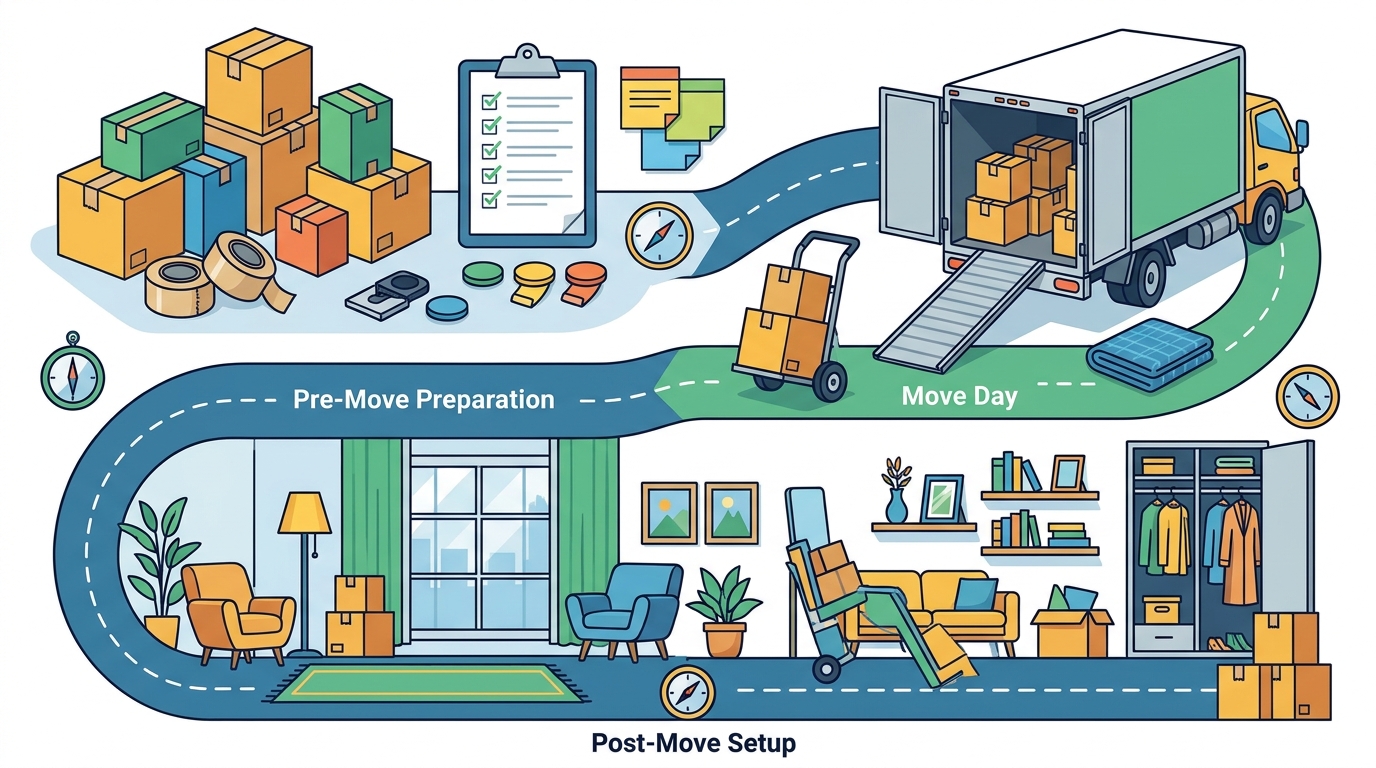
A moving timeline is a structured schedule that breaks relocation into distinct phases, ensuring no critical task is missed. The three primary phases are pre-move preparation, the move day itself, and post-move setup. Each phase requires specific actions and dedicated time to reduce stress and prevent logistical errors. Starting each phase at the correct time ensures a smooth transition to your new home. For additional details, review the Going Going Gone The.
The Pre-Move Phase: Planning and Packing
The pre-move phase is the longest and most critical stage of the relocation process. This phase typically begins three to fourteen days before the actual move date, depending on the size of the home and the complexity of the transition. During this period, the focus shifts from general planning to specific execution tasks like sorting, packing, and utility coordination. A master move calendar is essential to track deadlines and assign responsibilities.
Decluttering is the foundational task of this phase. You must decide what to keep, donate, sell, or discard before packing begins. Packing requires more time than unpacking, so starting early allows for careful handling of fragile items. Professional organizers often recommend creating a floor plan of the new residence to determine where furniture will go. This step ensures that movers can place items correctly, reducing the need for rearrangement later.
Sorting and Downsizing
Sorting belongings into categories helps streamline the packing process. Items that are not needed in the new home should be addressed early to avoid moving unnecessary weight. This step is particularly important for those downsizing or moving to senior living communities. Efficient sorting reduces the volume of boxes and lowers moving costs.
Packing and Labeling
Packing should be done room by room to maintain organization. Boxes should be labeled clearly with their contents and the destination room. This labeling system is crucial for the unpacking phase. It allows the team to place boxes in the correct rooms immediately upon arrival.
The Move Day Phase: Logistics and Supervision
The move day phase is a single, high-intensity day focused on the physical transfer of belongings. This phase typically lasts one day, though it may extend if the move is particularly large or complex. The primary goal is to ensure that all items are loaded, transported, and unloaded safely. Supervision of the moving crew is vital to prevent damage and ensure proper placement of furniture.
On move day, the focus is on coordination rather than manual labor. The moving company handles the heavy lifting, while the client or a professional organizer oversees the process. This includes directing the placement of large furniture based on the floor plan created during the pre-move phase. It also involves arranging for any necessary services, such as pet boarding or utility connections. The day ends with the movers unloading items into the appropriate rooms.
Supervising the Crew
Supervising the moving crew ensures that items are handled with care. This involves communicating clearly with the crew leaders about fragile items and specific placement requests. It also includes verifying that all items are accounted for before the trucks leave the old residence.
First Night Essentials
Preparing a first-night essentials kit is a smart strategy for move day. This kit should include bedding, bathroom necessities, and basic kitchen items. Having these items readily available allows for a comfortable first night in the new home. It reduces the stress of searching through boxes for basic needs.
The Post-Move Phase: Unpacking and Setup
The post-move phase is the final stage of the relocation process. This phase typically lasts one to three days, depending on the size of the home and the scope of the unpacking. The goal is to transform the new space from a collection of boxes into a functional living environment. Unpacking and organizing are the primary tasks during this phase.
Unlike the pre-move phase, unpacking is generally faster. A team of professionals can often set up a home in a single day. This includes unpacking boxes, lining shelves, and arranging kitchen and bathroom items. The focus is on creating a logical and efficient layout for daily life. This phase concludes with the removal of all packing materials and a final walkthrough of the home.
Unpacking and Organizing
Unpacking should be done systematically, starting with essential rooms like the kitchen and bathrooms. Items should be placed in their designated locations to create a functional space. This step is crucial for establishing new habits and routines in the new home. It helps the client feel settled and comfortable as quickly as possible.
Finishing Touches
Finishing touches include hanging pictures, connecting electronics, and adding decorative items. These tasks complete the transformation of the space. They also provide a sense of accomplishment and closure to the moving process. Taking the time to add personal touches makes the new home feel like home.
Strategies for Effective Timing
Effective timing is the key to a successful move. Each phase of the moving timeline has specific time requirements that must be respected. Failing to allocate enough time for a particular phase can lead to stress and errors. For example, starting to pack too late can result in rushed work and potential damage to items.
Professional move management services can help optimize the timeline. These services provide expertise in coordinating the various tasks involved in a move. They can create a customized plan that fits the client's schedule and needs. This approach ensures that each phase is completed efficiently and effectively. It also reduces the burden on the client, allowing them to focus on other aspects of their life.
Customizing the Plan
Every move is unique, so the timeline should be customized to fit the specific situation. Factors such as the size of the home, the distance of the move, and the number of people involved all affect the timeline. A professional organizer can assess these factors and create a plan that addresses them. This personalized approach ensures that the move is as smooth as possible.
Working with Professionals
Working with a professional team can significantly reduce the stress of moving. These teams have experience in handling all aspects of the relocation process. They can provide guidance on best practices and help avoid common pitfalls. Their expertise ensures that each phase of the timeline is executed correctly. This support is particularly valuable for those who are moving for the first time or who are dealing with a complex transition.
Key Takeaways
- The pre-move phase is the longest stage, typically lasting three to fourteen days.
- Decluttering and packing are the primary tasks during the pre-move phase.
- The move day phase is a single day focused on logistics and supervision.
- The post-move phase involves unpacking and setting up the new home.
- Creating a master move calendar helps track deadlines and responsibilities.
- Professional move management services can optimize the timeline and reduce stress.
- Customizing the plan to fit the specific situation ensures a smooth transition.
Frequently Asked Questions
How long does the pre-move phase usually take?
The pre-move phase typically takes three to fourteen days, depending on the size of the home and the complexity of the move. This phase includes tasks like decluttering, packing, and utility coordination.
What is the main goal of the move day phase?
The main goal of the move day phase is to ensure that all items are loaded, transported, and unloaded safely. This phase focuses on logistics and supervision rather than manual labor.
How long does the post-move phase last?
The post-move phase typically lasts one to three days. This phase involves unpacking boxes, organizing items, and adding finishing touches to the new home.
Do I need to be present during the unpacking process?
You do not necessarily need to be present during the unpacking process. Many clients choose to leave for the day while the professional team handles the setup. The team leader will check in with you as needed.
Can I customize the moving timeline to fit my schedule?
Yes, the moving timeline can be customized to fit your schedule and needs. A professional organizer can create a plan that addresses your specific situation and preferences.
What is the benefit of working with a professional move management service?
Working with a professional move management service can significantly reduce the stress of moving. These teams have experience in handling all aspects of the relocation process and can provide guidance on best practices. Learn more: FAQ s.