
Decluttering before packing is a critical phase of relocation that reduces moving costs and minimizes stress. By removing unwanted items before boxes are sealed, you ensure you only transport what you truly need. This process transforms a chaotic move into a streamlined transition to your new home. For additional details, review the Services.
1. Conduct a Room-by-Room Audit
Start with a systematic inventory of every space in your home. A room-by-room audit is a methodical process of evaluating every item in a specific area to determine its utility. Begin with high-traffic areas like the kitchen and living room, then move to storage spaces like the garage and attic. This approach prevents the overwhelm of tackling the entire house at once.
2. Apply the Four-Box Method
Sort items into Keep, Donate, Sell, and Trash categories. The four-box method is a sorting system that forces immediate decisions on every object. Label four large boxes or bins with these categories and place each item into the appropriate bin as you evaluate it. This visual separation makes the volume of unwanted items tangible and manageable.
3. Purge Based on Usage and Sentiment
Remove items you have not used in the past year or that no longer serve a purpose. Sentimental clutter is a common barrier to effective decluttering. Ask yourself if an item brings you joy or serves a practical function in your current lifestyle. If the answer is no, it is time to let it go, regardless of its sentimental history.
4. Digitize and Archive Important Documents
Scan vital records and physically store them in a secure, portable box. Document management is a specific task that involves converting paper records to digital formats and organizing physical copies. Keep only essential documents in a dedicated moving box labeled "Important Documents." This ensures critical files are accessible and protected during the move.
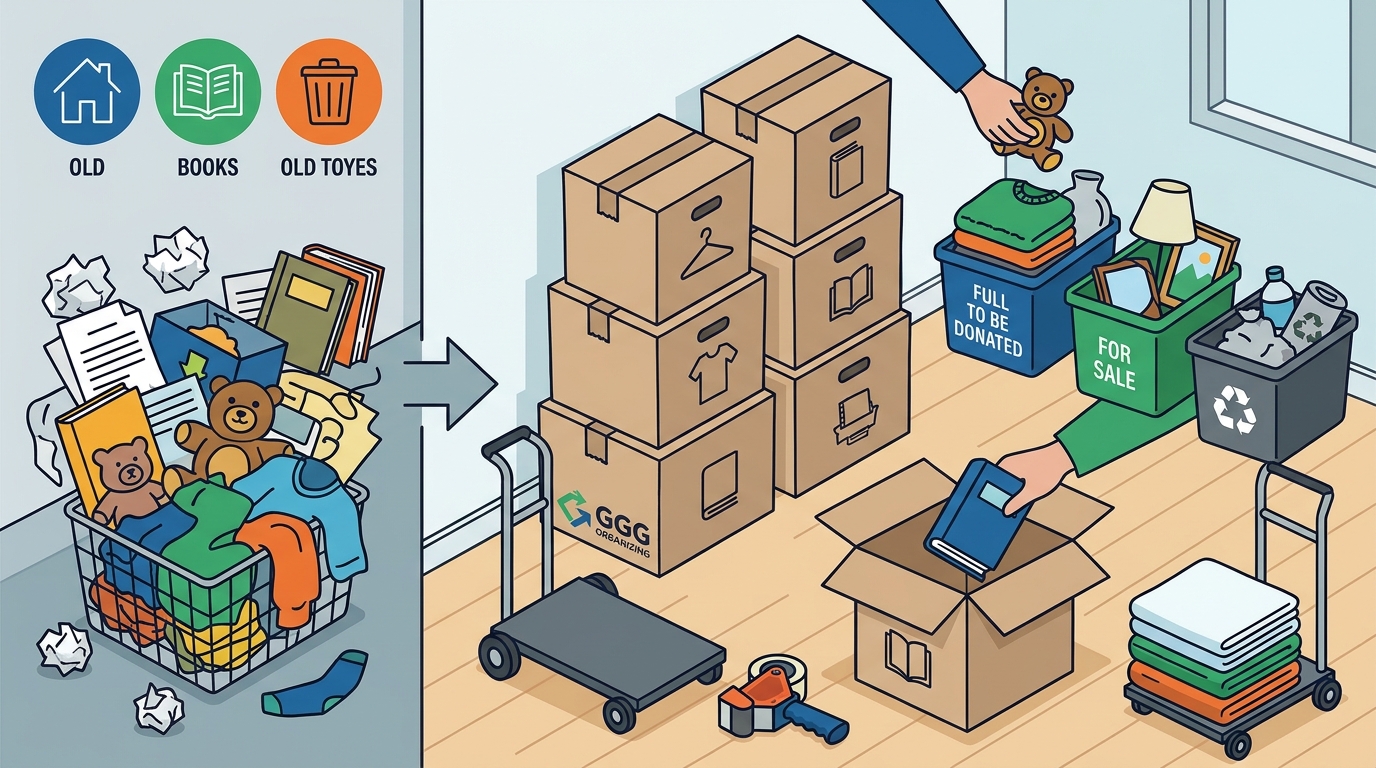
5. Donate and Sell Unwanted Items
Arrange pickups for donations and list sellable items before the moving date. Disposal planning is the logistical process of removing unwanted items from your home. Coordinate with local charities for donation pickups or use online platforms to sell items. This step clears space and may even offset some moving expenses.
6. Pack Essentials for the First Week
7. Label and Organize Remaining Boxes
Label boxes by room and content to facilitate efficient unpacking. Systematic labeling is a technique that involves marking each box with its destination room and a brief content list. This organization saves hours of unpacking time and helps you set up your new space logically. It also makes it easier for movers to place boxes in the correct rooms.
Choosing the Right Approach
Select the decluttering method that best fits your timeline and energy levels. If you are short on time, focus on high-impact areas and use the four-box method for quick decisions. If you have more time, a detailed room-by-room audit allows for a more thorough purge. The goal is to create a living space that reflects your current needs and preferences.
Frequently Asked Questions
How far in advance should I start decluttering before a move?
It is recommended to start decluttering at least four to six weeks before your moving date. This timeframe allows you to process items, arrange donations, and sell items without rushing. Starting early reduces the stress of the final week before the move.
What should I do with items I am unsure about keeping?
Create a "Maybe" box for items you are hesitant to discard. Seal the box and label it with the date. If you do not open the box within three months, donate or discard the contents. This method helps you make objective decisions without immediate emotional pressure.
How can I declutter efficiently if I have a large family?
Involve family members in the decluttering process by assigning specific rooms or categories to each person. Set aside dedicated time slots for sorting and make it a collaborative effort. This distributes the workload and ensures everyone has a say in what stays.
Is it better to hire a professional organizer for decluttering?
Hiring a professional organizer is beneficial if you feel overwhelmed or lack the time to declutter yourself. Professionals bring objectivity and efficiency to the process, helping you make faster decisions. They can also provide guidance on organizing your new space effectively.
How do I handle sentimental items during decluttering?
Limit sentimental items to a specific number of boxes or a dedicated shelf. Choose items that hold the most significant meaning and store them in a secure location. This approach allows you to preserve memories without letting them dominate your living space.
What are the most common mistakes people make when decluttering for a move?
Common mistakes include packing items without sorting them first and keeping items out of guilt or obligation. Avoid the "just in case" mentality by asking if you would buy the item again if you did not already own it. Making decisive choices is key to a successful decluttering process.
Ready to Simplify Your Move?
Decluttering is the foundation of a successful move. By following these seven steps, you can reduce the volume of items you transport and create a more organized living space. For personalized assistance with decluttering and move management, consider reaching out to GGG Organizing in the Bay Area. Their team specializes in helping clients navigate the complexities of relocation with efficiency and care. Learn more: Services.