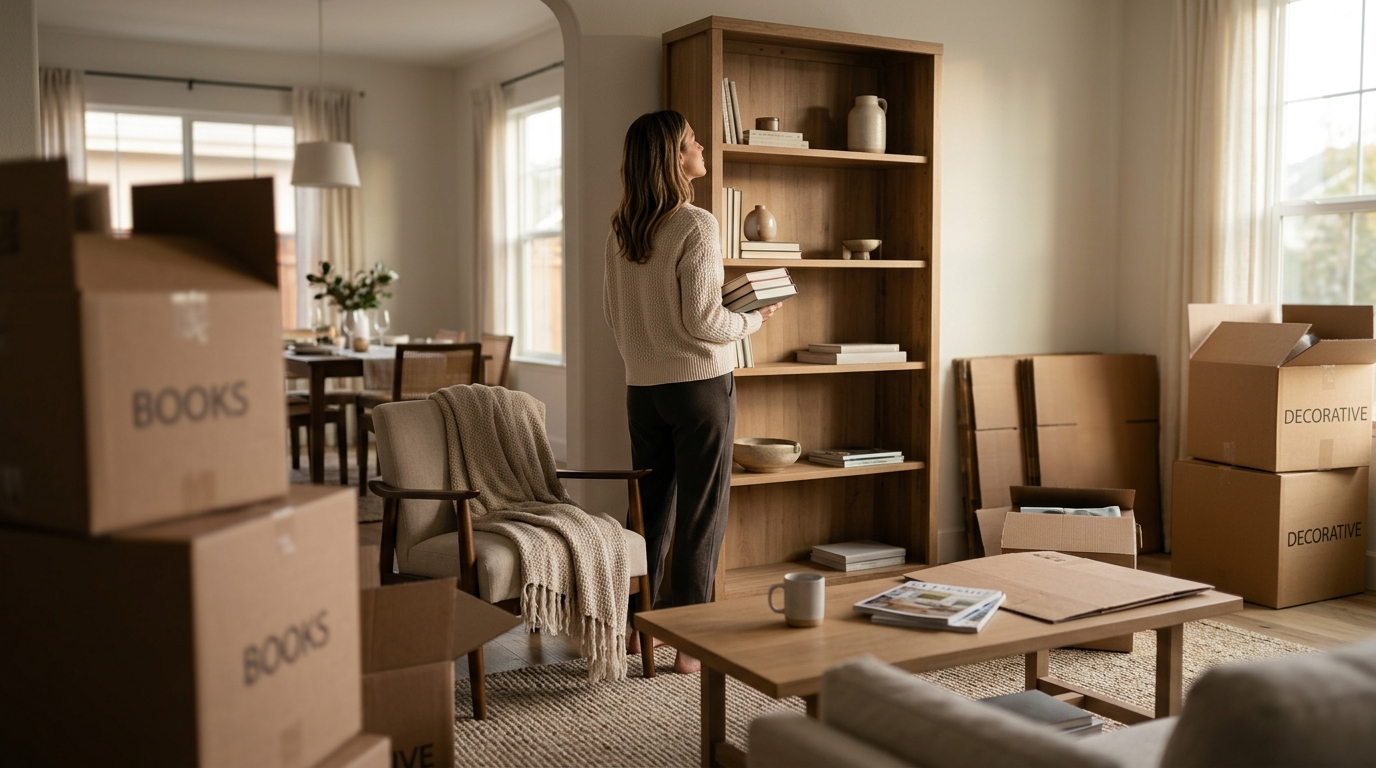
Unpacking vs Redesigning: The Ultimate Guide to Post-Move Organization
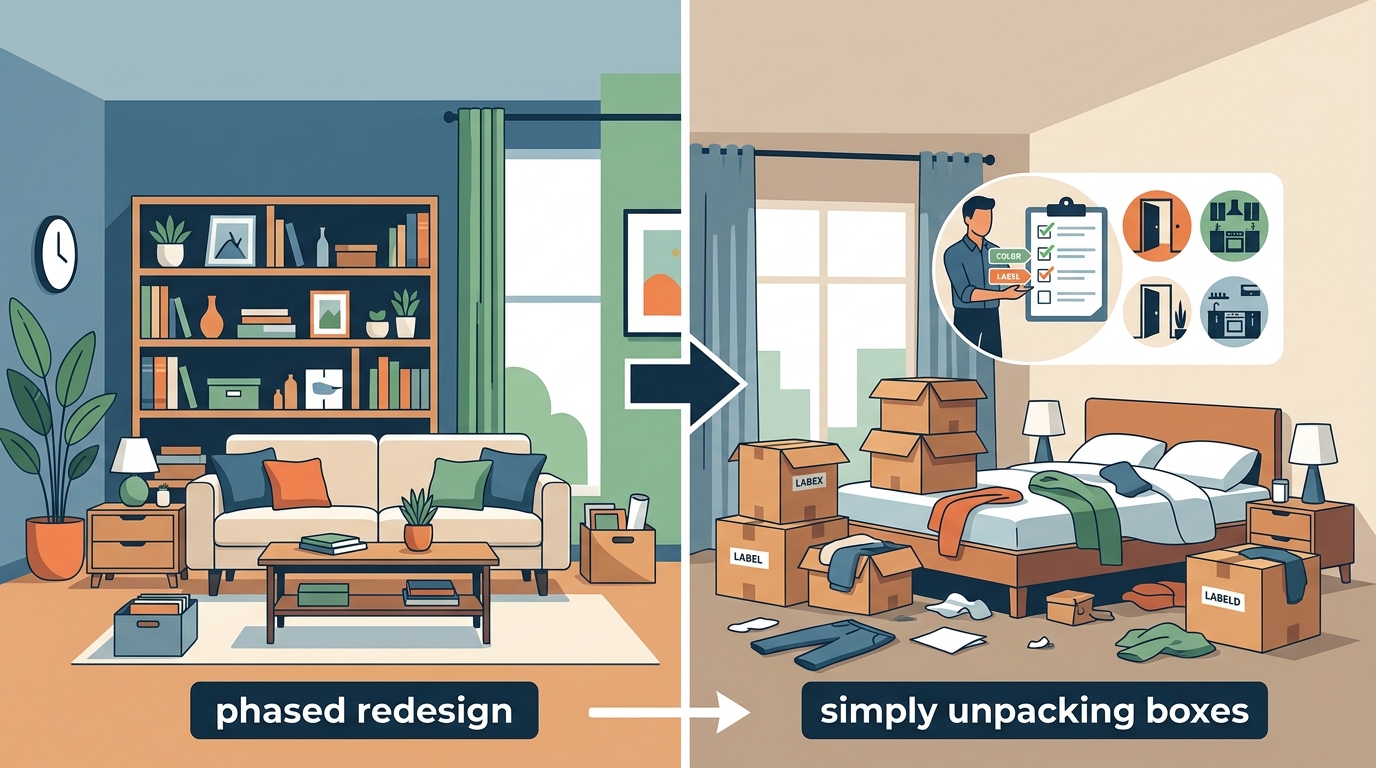
For most families, a phased redesign approach suits better than simply unpacking boxes. This method prioritizes high-traffic zones first, allowing residents to function immediately while systematically organizing the rest of the home. This guide covers the strategic differences between these two methods, detailing how professional organizers in San Mateo County help families transition smoothly into new living spaces. For additional details, review the gggorganizing.com homepage.
Unpacking Essentials First
Traditional unpacking focuses on emptying boxes room by room. This method is straightforward but often leads to clutter accumulation. Families typically open boxes in the order they were packed, which rarely matches daily needs. The result is a home that looks messy for weeks. Essential items like toiletries and kitchenware may remain sealed in boxes while the family improvises. For additional details, review the gggorganizing.com homepage.
The Linear Unpacking Model
Linear unpacking is a sequential process where each room is cleared before moving to the next. This approach works well for small moves or when the new layout mirrors the old one. However, it fails to address spatial efficiency. Boxes often pile up in living areas, creating trip hazards and visual noise. The psychological impact of seeing stacked boxes can increase stress during the transition period. For additional details, review the gggorganizing.com homepage.
Identifying Critical Zones
GGG Organizing emphasizes that unpacking is not just about removing items from boxes. It is about placing items in their intended locations. Without a plan, unpacking becomes a temporary storage solution. Items end up in wrong rooms or on surfaces where they do not belong. This sets the stage for long-term disorganization. For additional details, review the gggorganizing.com homepage.
Phased Redesign Approach
A phased redesign approach is a strategic method that reorganizes spaces based on function and flow. Instead of emptying boxes, this method involves analyzing the new space and creating systems. It is particularly effective for families moving to different sized homes or changing layouts. This approach transforms the move into an opportunity for improvement. It ensures that the new home works better than the old one. For additional details, review the gggorganizing.com homepage.
Space Analysis and Function Mapping
Systematic Organization and Setup
Long-Term Habit Formation
Approach Comparison
The table below summarizes the key differences between traditional unpacking and phased redesign. This comparison helps families choose the strategy that best fits their needs and timeline.
| Primary Focus | Emptying boxes | Optimizing space and function |
| Time Efficiency | Fast initial setup, slow long-term | Slower initial setup, fast long-term |
| Clutter Risk | High, due to temporary piles | Low, due to direct placement |
| Best For | Similar layouts, small moves | Layout changes, downsizing, upgrades |
Key Takeaways
- Phased redesign is superior for families changing home layouts or sizes.
- Traditional unpacking works best when the new home mirrors the old one.
- Prioritize critical zones like kitchens and bathrooms in the first 48 hours.
- Space analysis before unpacking prevents clutter and misplacement.
- Professional organizers can help design sustainable storage systems.
- Long-term habit formation is the ultimate goal of post-move organization.
Frequently Asked Questions
What is the main difference between unpacking and redesigning?
Unpacking is the physical act of removing items from boxes. Redesigning is the strategic process of organizing spaces based on function and flow. Redesigning focuses on how the space is used, not just where items are placed.
How long does a phased redesign take?
A phased redesign typically takes longer than simple unpacking. It may take several days to a week depending on the size of the home. However, it results in a fully organized and functional space faster in the long run.
Can I do a phased redesign on my own?
Yes, but it requires careful planning and discipline. You must analyze each space and create systems before unpacking. Many families find it helpful to hire a professional organizer for guidance.
When should I use traditional unpacking?
Use traditional unpacking when moving to a similar home layout. If the new home is nearly identical to the old one, unpacking room by room is efficient. It is also suitable for small moves with minimal belongings.
How does GGG Organizing help with post-move organization?
Is it worth hiring a professional for a move?
For complex moves or layout changes, hiring a professional is often worth it. It saves time and reduces stress. Professionals bring expertise in space planning and organization that can transform your living environment. Learn more: gggorganizing com.