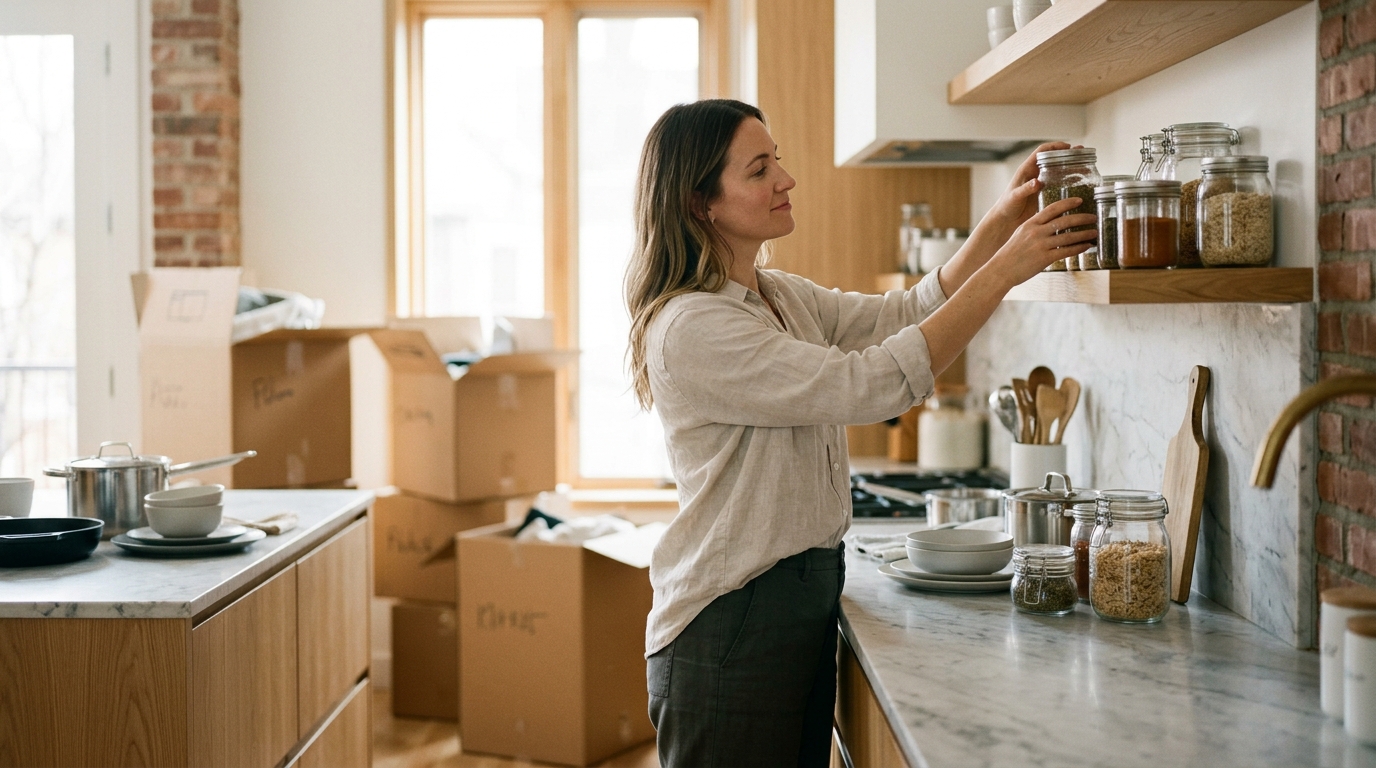
The process for unpacking boxes and organizing kitchens after a move involves prioritizing daily essentials, establishing functional zones, and implementing storage systems before tackling decorative items. GGG Organizing helps San Mateo County residents navigate this transition by managing the logistics of unpacking and designing efficient kitchen layouts. This guide covers kitchen zone planning, essentials-first unpacking, cabinet organization systems, and the optimal unpacking sequence to transform your new space quickly.
Kitchen Zone Planning
Kitchen zone planning is the strategic division of your kitchen into functional areas based on workflow and usage frequency. Effective planning reduces movement and increases efficiency during daily meal preparation. Before unpacking a single box, map out your kitchen into distinct zones to determine where items belong.
Defining Functional Zones
Assessing Workflow Efficiency
Essentials First Unpacking
Essentials-first unpacking is a prioritization strategy that focuses on unpacking items needed for immediate daily use before addressing less critical belongings. This approach ensures you can function normally in your new home within the first 24 to 48 hours. It prevents the overwhelming feeling of being surrounded by boxes while lacking basic necessities.
The 24-Hour Kit
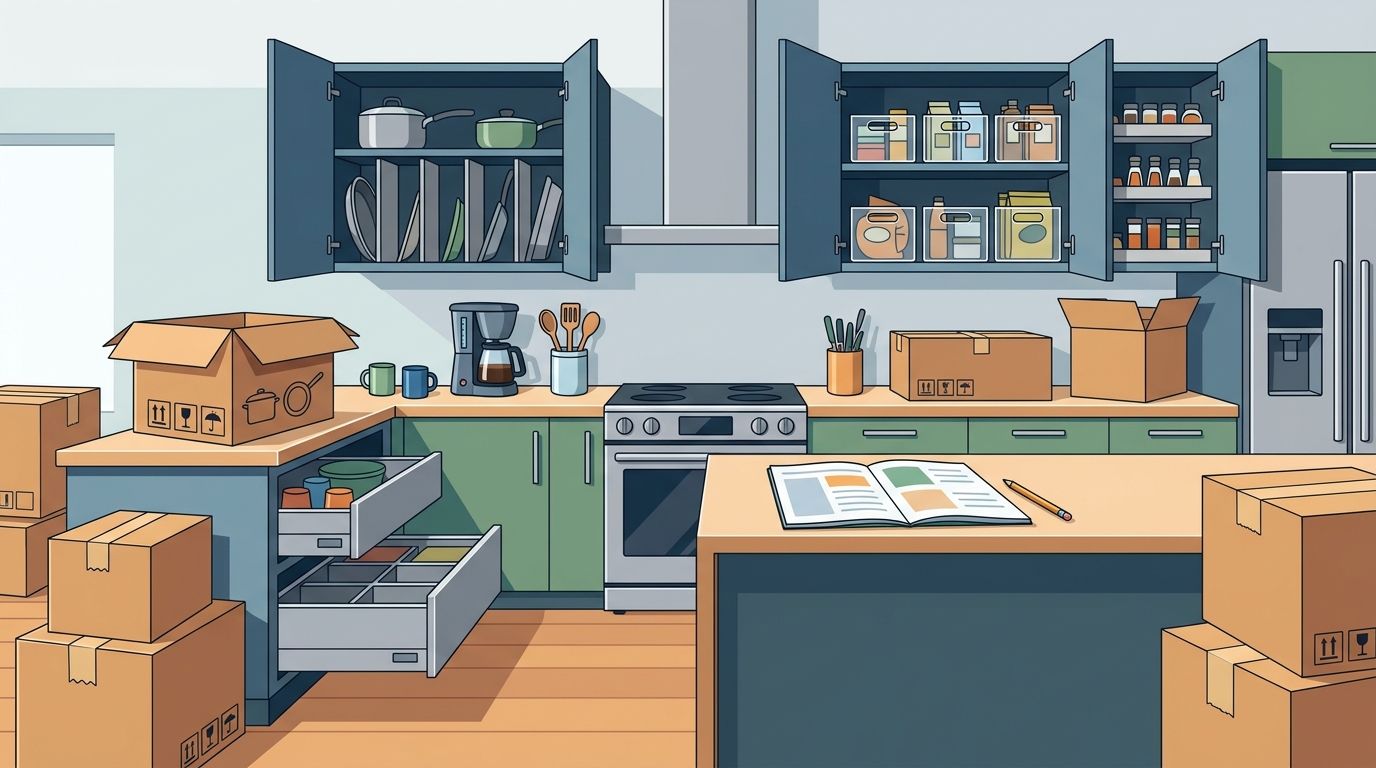
Identify a small set of boxes labeled as 'Essentials' or 'First Night.' These should contain toiletries, bedding, a change of clothes, basic kitchen utensils, and a few plates and glasses. Unpack these boxes immediately upon arrival. This creates a functional living space and a basic kitchen setup, allowing you to rest and eat without digging through inventory.
High-Frequency Kitchen Items
Cabinet Organization Systems
Cabinet organization systems are structured methods for storing items to maximize space and maintain visual order. Implementing these systems before unpacking ensures that items are placed correctly the first time, preventing the need for reorganization later. A well-organized cabinet is not just about aesthetics; it is about accessibility and efficiency.
Vertical and Horizontal Storage
Utilize vertical space with shelf risers and lazy susans. Shelf risers allow you to stack items like plates or bowls, doubling your storage capacity. Lazy susans are ideal for corner cabinets, providing easy access to items that would otherwise be buried. For horizontal storage, use drawer dividers to keep utensils, silverware, and small tools separated and visible.
Labeling and Consistency
Labeling is a critical component of any organization system. Use clear, consistent labels for bins and shelves. This helps all household members know where items belong and where to find them. GGG Organizing emphasizes the importance of developing new organizational systems that change old habits. By labeling and standardizing storage, you create a system that is easy to maintain and intuitive for everyone in the household.
Unpacking Sequence
Unpacking sequence is the chronological order in which you open and organize boxes. A logical sequence prevents chaos and ensures that your kitchen is fully functional in a manageable timeframe. Instead of unpacking randomly, follow a structured plan that moves from high-use to low-use items.
Phase 1: Daily Use
Phase 2: Weekly Use
Next, unpack items used weekly, such as baking sheets, specialty cookware, and small appliances. These items can be stored in less accessible locations, such as upper cabinets or the pantry. This phase allows you to expand your kitchen's functionality without cluttering your primary workspace.
Phase 3: Occasional and Decorative
Finally, unpack items used occasionally, such as holiday decorations, specialty gadgets, and extra tableware. These items can be stored in the back of cabinets or in dedicated storage bins. By saving these for last, you ensure that your daily workflow remains uncluttered and efficient. This phased approach allows you to enjoy your new kitchen while gradually completing the organization process.
Comparison of Unpacking Strategies
| Strategy | Focus | Timeframe | Best For |
|---|---|---|---|
| Essentials First | Daily necessities | 24-48 hours | Immediate functionality |
| Zone-Based | Functional areas | 1-2 weeks | Long-term organization |
| Phase-Based | Usage frequency | 2-4 weeks | Gradual settling |
Key Takeaways
- Plan your kitchen zones before unpacking to ensure efficient workflow.
- Unpack essentials first to establish a functional living space quickly.
- Implement cabinet organization systems like shelf risers and dividers to maximize space.
- Follow a phased unpacking sequence based on usage frequency.
- Label all storage containers to maintain consistency and ease of use.
- Consider hiring a professional service like GGG Organizing for complex moves.
- Redesigning spaces can help change old habits and create a more pleasant home.
- Focus on high-frequency items first to reduce daily stress.
Frequently Asked Questions
How long does it take to fully unpack a kitchen?
It typically takes 2 to 4 weeks to fully unpack and organize a kitchen, depending on the size of the household and the volume of items. Prioritizing essentials allows you to function normally within the first 48 hours.
What should I unpack first in my kitchen?
Start with daily essentials like plates, glasses, and basic utensils. These items are needed for immediate meal preparation and should be placed in easily accessible locations.
How can I organize small kitchen cabinets?
Use vertical storage solutions like shelf risers and lazy susans. Drawer dividers are also effective for keeping utensils and small tools organized and visible.
Should I unpack all boxes at once?
No, unpacking all boxes at once can be overwhelming and lead to clutter. Follow a phased approach, starting with high-frequency items and moving to occasional and decorative items.
What is the benefit of zone planning?
Can professional organizers help with kitchen unpacking?
Yes, professional organizers like GGG Organizing can help with unpacking, organizing, and redesigning spaces. They provide expertise in creating efficient systems and managing the logistics of moving.
How do I label my kitchen storage?
Use clear, consistent labels for bins and shelves. This helps all household members know where items belong and where to find them, maintaining order over time.
What if my kitchen layout is different from my old one?
Assess the new layout and adjust your zone planning accordingly. Observe the natural flow of the space and place items based on their new locations to ensure efficiency. Learn more: gggorganizing com.