
Start planning a move timetable by working backward from your move date to set critical deadlines. You organize new habits by identifying one keystone behavior and building a daily routine around it. GGG Organizing helps San Mateo County families manage this process. This guide covers backward timeline planning, habit formation, decluttering phases, and professional selection. It provides a structured framework for a smooth relocation. For additional details, review the gggorganizing com.
Backward Timeline Planning
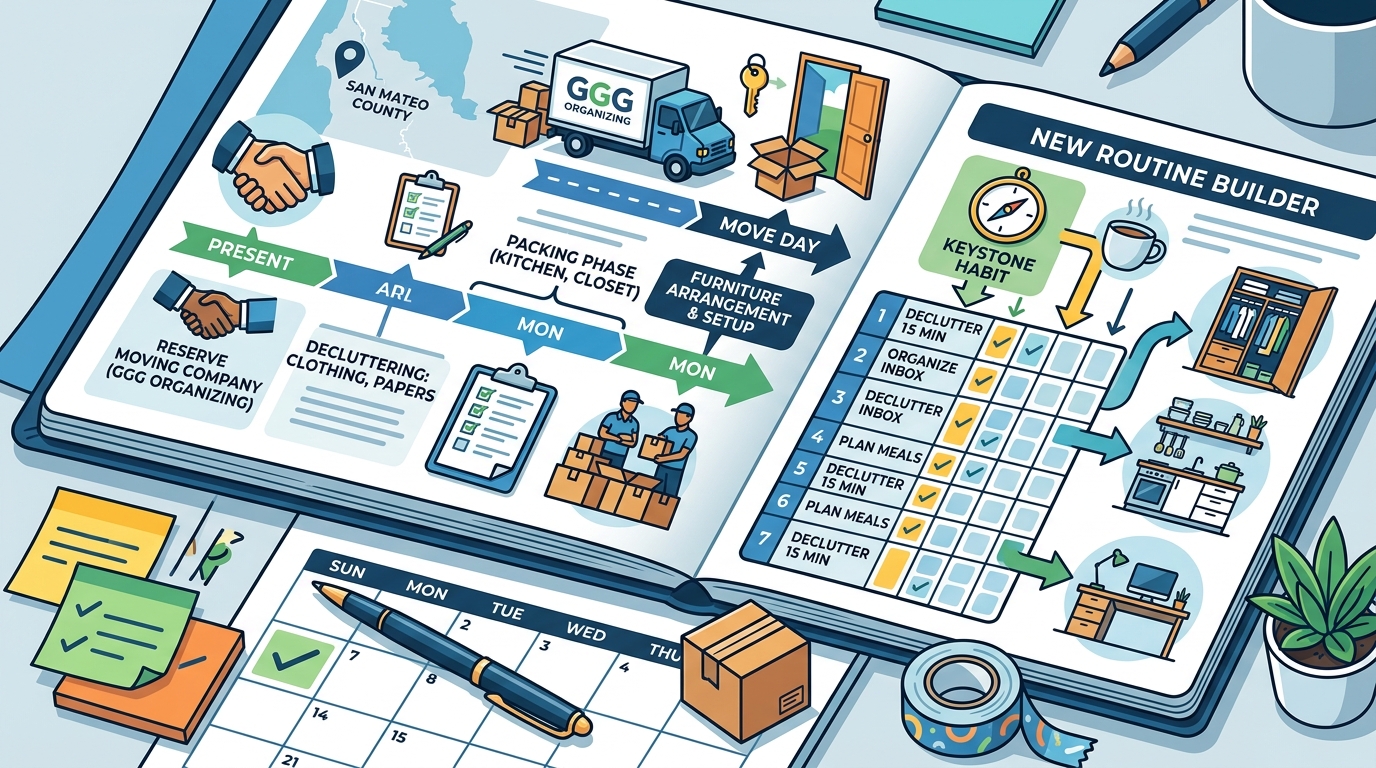
Backward timeline planning is a project management technique that starts with the final deadline and works backward to determine start dates. This method prevents last-minute panic. It ensures every task has a specific window for completion. For a move, the final deadline is the day the truck arrives. You must work backward from that date to set milestones. For additional details, review the .
Setting the Anchor Date
The anchor date is the move date. From this date, you subtract the time required for each major phase. Packing takes time. Decluttering takes time. Booking movers takes time. You must account for lead times. Movers often require booking weeks in advance. You should book them as soon as your dates are confirmed. This locks in your schedule. For additional details, review the Customer Experience.
Defining Critical Path Tasks
Keystone Habit Formation
Keystone habit formation is the process of building one core behavior that triggers other positive changes. In moving, this is often the habit of daily sorting. You commit to sorting one small area every day. This small win builds momentum. It prevents the overwhelming feeling of a large move. GGG Organizing helps clients change old habits and transform their living environments. We focus on developing new organizational systems. For additional details, review the Frequently Asked Questions.
Identifying Your Keystone
Linking Habits to Routines
Link your keystone habit to an existing routine. This is called habit stacking. For example, sort one drawer after your morning coffee. The existing routine triggers the new habit. This reduces the willpower required. It makes the habit automatic. Over time, the habit becomes part of your daily life. It is no longer a chore. It is a natural part of your day. For additional details, review the About.
Decluttering Phases
Decluttering phases are the distinct stages of removing unwanted items from your home. These phases ensure you do not pack trash. You sort items into categories. You decide what to keep, donate, sell, or discard. This process reduces the volume of your move. It makes packing faster and cheaper. GGG Organizing assists clients with selling, donating, and hauling unwanted items. We help you clear out your home efficiently.
The Four-Box Method
Managing Donations and Sales
Donations and sales require logistics. You must arrange pickup or transport. You must schedule these events. Do not let donated items sit in your home. They take up space. They clutter your mind. GGG Organizing manages the logistics of selling and donating. We handle the hauling. You do not have to lift heavy boxes. We take care of the unwanted items. This frees up your time for packing.
Professional Organizer Selection
Professional organizer selection is the process of choosing a qualified expert to assist with your move. You should look for specific experience. Not all organizers specialize in moves. Some focus on closets. Some focus on offices. You need a mover. GGG Organizing specializes in move management and senior relocation. We have the specific skills you need. We understand the unique challenges of moving.
Verifying Credentials and Experience
Verify the organizer's credentials. Look for certifications. Look for insurance. Look for references. Ask for examples of similar moves. Did they handle a senior move? Did they handle a large family move? Did they manage a complicated relocation? The answers will tell you if they are a good fit. You want an expert who has done this before. You do not want a generalist.
Assessing Communication Style
Communication is critical in a move. You will work closely with your organizer. You need to feel comfortable. You need to trust them. Schedule a consultation. Observe their communication style. Are they clear? Are they responsive? Do they listen? A good organizer will explain their process. They will answer your questions. They will make you feel at ease. This relationship is the foundation of a successful move.
Weekly Progress Tracking
Weekly progress tracking is the practice of reviewing your move status every week. This keeps you on schedule. It identifies bottlenecks early. You review your timeline. You check off completed tasks. You adjust deadlines if needed. This regular check-in prevents drift. It keeps you accountable. It ensures you are on track for your move date.
Creating a Tracking Dashboard
Create a simple dashboard. Use a spreadsheet or a whiteboard. List your tasks. Mark them as done, in progress, or not started. Review this dashboard every week. Spend 15 minutes on it. This is your command center. It gives you a clear view of your progress. It helps you prioritize. It reduces anxiety. You know where you stand. You know what is next.
Adjusting the Plan
Plans change. Life happens. You must be flexible. If you fall behind, adjust your plan. Move tasks around. Add more time. Ask for help. Do not let a delay derail the entire move. A good organizer will help you adjust. They will re-prioritize. They will keep you on track. Flexibility is a key component of successful move management.
Move Timeline Phases
Move timeline phases are the major stages of the relocation process. These phases provide a high-level view of the move. They help you understand the big picture. The phases are preparation, decluttering, packing, moving, and unpacking. Each phase has specific goals. You must complete one phase before moving to the next. This structured approach ensures nothing is missed.
Preparation Phase
The preparation phase occurs 8 to 12 weeks before the move. You book movers. You book organizers. You start decluttering. You update your address. You notify banks and utilities. This phase sets the foundation. It handles the administrative tasks. It prepares you for the physical work. It is the most critical phase. If you skip it, you will face problems later.
Execution Phase
The execution phase occurs 2 to 4 weeks before the move. You pack non-essentials. You finalize donations. You confirm mover details. You prepare your moving day. This phase is intense. It requires focus. You are completing the bulk of the work. You are getting ready for the big day. You should feel confident. You should feel prepared. You are ready to move.
Decluttering Schedule
A decluttering schedule is a calendar of sorting sessions. It assigns specific areas to specific days. This prevents overwhelm. You do not try to do everything at once. You focus on one area at a time. This makes the task manageable. It provides a sense of accomplishment. You see the room change. You see the clutter disappear. This visual progress motivates you to continue.
Room-by-Room Approach
Use a room-by-room approach. Start with the easiest room. Build momentum. Then move to harder rooms. Do not skip rooms. Do not leave items behind. Complete each room fully. This creates a clear boundary. You know what is done. You know what is left. This clarity is essential. It reduces stress. It keeps you focused.
Time-Boxing Sessions
Time-box your sessions. Set a timer for 30 or 60 minutes. Work until the timer goes off. Then stop. This prevents burnout. It keeps your energy high. You can do more in a focused 30 minutes than in an unfocused 3 hours. Rest is part of the process. Take breaks. Hydrate. Stretch. This sustainable pace ensures you finish on time.
Packing Session Structure
Packing session structure is the method of organizing your packing work. It ensures efficiency. It prevents confusion. You pack by room. You label boxes clearly. You create an inventory. This structure makes unpacking easier. You know where everything is. You can find what you need. This organization saves time and stress on moving day.
Labeling and Inventory
Essentials Box
Professional Consultation Process
The professional consultation process is the initial meeting with your organizer. It sets the stage for the project. You discuss your goals. You review your timeline. You identify challenges. This meeting builds trust. It clarifies expectations. It ensures you are aligned. GGG Organizing leads this process with care. We listen to your needs. We tailor our approach to your situation.
Defining Scope and Goals
Define the scope of the project. What needs to be done? What are your goals? Do you want a full move management? Do you want decluttering only? Do you want unpacking? Be clear. This helps the organizer plan. It helps you budget. It sets realistic expectations. A clear scope prevents scope creep. It keeps the project on track. It ensures a successful outcome.
Building the Action Plan
Key Takeaways
- Backward timeline planning starts with the move date and works backward to set deadlines.
- Keystone habit formation involves building one small daily habit to trigger broader change.
- Decluttering phases use the four-box method to sort items into keep, donate, sell, and trash.
- Professional organizer selection requires verifying credentials and assessing communication style.
- Weekly progress tracking keeps you on schedule and identifies bottlenecks early.
- A decluttering schedule assigns specific areas to specific days to prevent overwhelm.
- Packing session structure involves labeling boxes and creating an inventory for easy unpacking.
Frequently Asked Questions
How far in advance should I start planning a move?
You should start planning 8 to 12 weeks in advance. This gives you time to book movers and organizers. It allows for decluttering and packing. It reduces stress. It ensures a smooth transition.
What is a keystone habit in moving?
A keystone habit is a small daily behavior that triggers other positive changes. In moving, it is often daily sorting. It builds momentum. It prevents overwhelm. It makes the process manageable.
How do I choose a professional organizer?
Look for specific move experience. Verify credentials and insurance. Check references. Assess communication style. Choose an expert who specializes in moves. GGG Organizing is a good fit for move management.
What is the four-box method?
The four-box method is a sorting technique. You use four containers for keep, donate, sell, and trash. You place each item in the appropriate box. This forces a decision. It is highly effective for decluttering.
How do I track my move progress?
Use a weekly tracking dashboard. List your tasks. Mark them as done, in progress, or not started. Review it every week. Adjust your plan as needed. This keeps you on track.
What should I pack in my essentials box?
How does GGG Organizing help with moves?
GGG Organizing provides move management, decluttering, and organizing services. We help with packing, moving, and unpacking. We manage the logistics. We help you change habits. We transform your living environment.
Can I do the move myself?
You can do the move yourself. It requires time and effort. You must manage all the logistics. It can be stressful. A professional organizer can help. They provide expertise and support. They make the process easier.
Conclusion
Planning a move is a complex task. It requires structure and discipline. By using backward timeline planning and keystone habit formation, you can manage the process effectively. GGG Organizing provides the expertise and support you need. We help you navigate the logistics. We help you build new habits. We transform your living environment. Contact GGG Organizing today to start your move planning journey. Let us help you move with confidence. Learn more: gggorganizing com.