
Start planning a move timetable by working backward from your target move date, allocating specific tasks to each week, and pairing logistical steps with behavioral changes. This guide covers backward timeline planning, keystone habit formation, decluttering phases, professional organizer selection, and weekly progress tracking. GGG Organizing, based in San Mateo, CA, helps clients in the Bay Area manage these complex transitions with structured, professional support.
Backward Timeline Planning
Backward timeline planning is a project management technique where you start with the final deadline and work backward to determine the start date and intermediate milestones. For a move, this method prevents last-minute panic by distributing heavy lifting and decision-making across weeks rather than days. It transforms a chaotic event into a manageable series of smaller tasks.
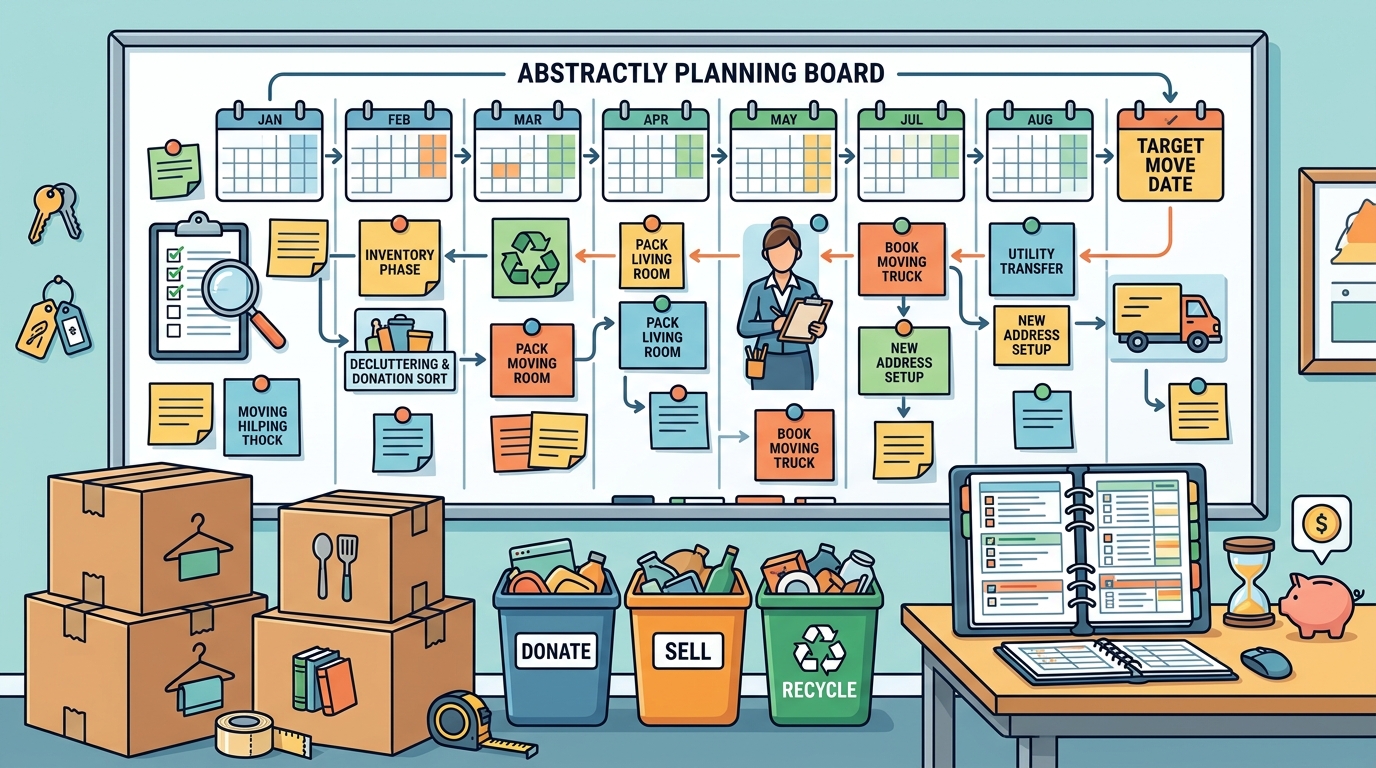
The 12-Week Framework
Most professional movers recommend a 12-week lead time for standard residential moves. This allows sufficient buffer for unexpected delays, such as appliance repairs or permit issues. The timeline is divided into three distinct phases: preparation, execution, and transition.
- Weeks 1-4 (Preparation): Focus on decluttering, sorting, and deciding what stays, goes, or is donated. This is the most labor-intensive phase.
- Weeks 5-8 (Logistics): Book movers, pack non-essentials, and address utility transfers. Begin organizing the new space if access is available.
- Weeks 9-12 (Execution): Final packing, moving day logistics, and immediate unpacking of essentials.
Customizing for Senior Moves
Senior living moves often require a longer timeline due to the complexity of downsizing and the need for careful coordination with care facilities. GGG Organizing specializes in these transitions, ensuring that the move to a senior living community is handled with sensitivity and precision. The timeline may extend to 16 weeks to accommodate the emotional and logistical weight of leaving a long-term home.
Keystone Habit Formation
Keystone habit formation is the process of establishing a single, high-impact behavior that triggers a cascade of other positive changes. In the context of moving, the keystone habit is often the practice of immediate organization. Instead of unpacking boxes and leaving them on the floor, you unpack and organize items into their permanent homes immediately.
Why Habits Matter in Moving
Moving is a major life disruption that can reset behavioral patterns. Without intentional habit formation, clients often fall back into old, disorganized routines in their new space. This leads to a Learn more: gggorganizing com.