
How to Plan a Move Timetable and Build New Habits with a Professional
Start by working backward from your move date to create a realistic timeline, then partner with a professional to establish sustainable organizational habits. This guide covers backward timeline planning, keystone habit formation, decluttering phases, and how to select and work with a professional organizer like GGG Organizing to manage the logistics and behavioral changes required for a successful relocation.
Backward Timeline Planning
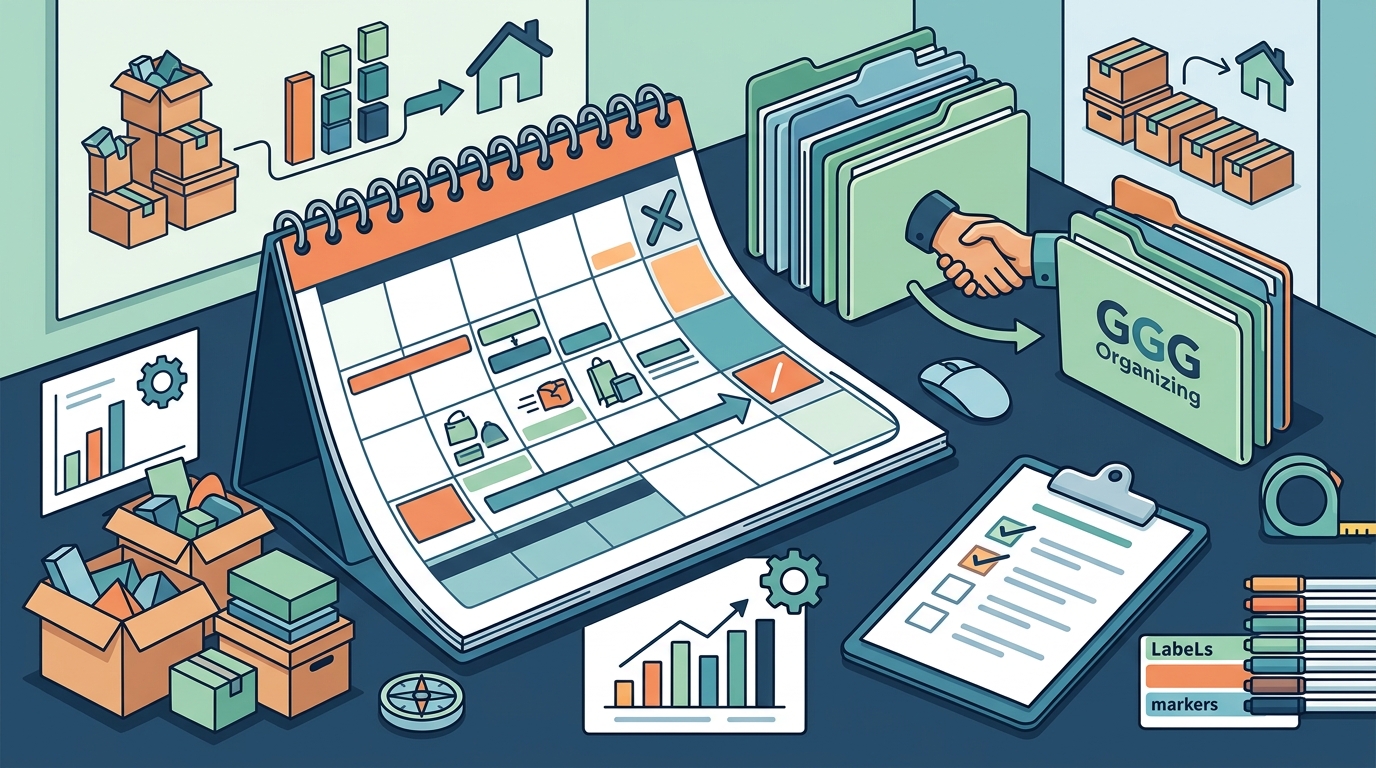
Backward timeline planning is a strategic method where you start with your final move date and work backward to determine when each task must be completed. This approach prevents the common mistake of underestimating the time required for packing, decluttering, and administrative changes. By anchoring your plan to a fixed date, you create a sense of urgency that drives consistent action rather than last-minute panic.
Setting the Anchor Date
Your anchor date is the day you physically move into your new residence. From this point, you subtract specific time blocks for major milestones. For example, if you are moving in 8 weeks, you must have all non-essential items packed by week 6. You must have utilities transferred and address changes processed by week 7. This reverse engineering ensures that no critical task is left to the final days when stress levels are highest.
Identifying Critical Path Tasks
Not all tasks are equal in terms of time sensitivity. Some tasks, like hiring movers or changing your address with the post office, have long lead times. Others, like packing kitchenware, can be done in the final week. A professional organizer helps you identify these critical path tasks. They ensure that tasks with long lead times are scheduled first, while flexible tasks are placed in the buffer zones of your timeline.
Keystone Habit Formation
Keystone habit formation is the process of establishing one primary behavior that triggers a cascade of positive changes in other areas of your life. In the context of moving, the keystone habit is often the practice of immediate tidying. This means that every time you use an item, you return it to its designated place. This small habit reduces the overall volume of clutter and makes the final packing process significantly faster.
The Power of Small Wins
Building a new habit requires consistency, not intensity. Instead of trying to declutter an entire room in one weekend, focus on a 15-minute daily session. This low barrier to entry makes it easier to start and maintain the habit. Over time, these small wins compound, leading to a home that is already partially organized before the move begins. GGG Organizing emphasizes this approach, helping clients develop systems that stick long after the move is complete.
Creating Environmental Cues
Environmental cues are visual or physical reminders that prompt you to perform a desired behavior. For example, placing a donation box in the hallway serves as a cue to sort items you no longer need. Creating these cues in your home environment makes the habit automatic. You do not have to rely on willpower; the environment does the work for you. This is a core component of the professional organizing methodology used by GGG Organizing to help clients change old habits.
Decluttering Phases
Decluttering phases are distinct stages of the sorting process that move from easy decisions to difficult ones. This phased approach prevents decision fatigue, which is a major barrier to successful decluttering. By breaking the process into manageable chunks, you maintain momentum and avoid the overwhelm that often leads to procrastination.
Phase 1: The Easy Wins
Phase 2: The Functional Sort
The second phase involves sorting items based on their utility. You ask yourself if you have used the item in the last year. If the answer is no, it is a candidate for donation or sale. This phase requires more thought but is still objective. It helps you distinguish between items you need for your daily life and items you are keeping out of habit.
Phase 3: The Emotional Items
The final phase addresses items with sentimental value. This is the most difficult phase because it involves emotional attachment rather than utility. A professional organizer can help you navigate this phase by providing objective perspective. They help you identify which items truly hold meaning and which are simply clutter that you have been too afraid to address.
Professional Organizer Selection
Professional organizer selection is the process of evaluating and hiring a qualified expert to assist with your move. The right organizer will have experience with your specific type of move, whether it is a senior relocation, a downsizing move, or a standard residential move. They should also have a clear methodology for working with clients to ensure a collaborative and respectful process.
Experience and Specialization
Communication Style
Your relationship with your organizer is built on communication. You need someone who listens to your needs and respects your boundaries. During the initial consultation, pay attention to how they communicate. Do they ask clarifying questions? Do they explain their process clearly? A good organizer will make you feel comfortable and confident in their ability to help you achieve your goals.
Weekly Progress Tracking
Weekly progress tracking is a systematic method of reviewing your move preparation to ensure you are on schedule. This involves setting specific goals for each week and reviewing them at the end of the week. Tracking your progress helps you identify bottlenecks early and adjust your plan as needed. It also provides a sense of accomplishment as you see your checklist items being completed.
Setting Weekly Goals
At the start of each week, define 2 to 3 specific goals for your move preparation. These goals should be measurable and achievable. For example, a goal might be to pack all books from the living room or to complete the address change with the post office. Avoid vague goals like "get organized" because they are difficult to measure and track.
Review and Adjust
At the end of each week, review your goals and assess your progress. Did you complete your goals? If not, why not? Identify the barriers that prevented you from completing your tasks and adjust your plan for the following week. This iterative process ensures that your timeline remains realistic and achievable. A professional organizer can facilitate these reviews, providing accountability and expert guidance.
Move Timeline Phases
Move timeline phases are the major stages of the moving process, from initial planning to final setup. Understanding these phases helps you allocate your time and energy effectively. Each phase has specific tasks and deliverables that must be completed before moving on to the next. This structured approach ensures that no critical step is overlooked.
Pre-Move Phase
The pre-move phase begins 8 to 12 weeks before your move date. This is the time for major decisions and administrative tasks. You should research and hire movers, change your address, and begin the decluttering process. You should also start packing non-essential items. This phase sets the foundation for a smooth move.
Move Week Phase
Move week is the final sprint. This is the time to pack the last of your belongings and prepare for the physical move. You should have a clear plan for the day of the move, including who is supervising the movers and where the boxes are going. This phase requires high energy and focus, so it is important to be well-rested and prepared.
Post-Move Phase
The post-move phase begins once you have arrived at your new home. This is the time to unpack and set up your new space. A professional organizer can help you unpack efficiently, ensuring that your new home is functional and comfortable as quickly as possible. This phase is often overlooked, but it is critical for settling into your new environment.
Decluttering Schedule
A decluttering schedule is a detailed plan that assigns specific rooms or areas to specific days or weeks. This schedule ensures that you cover all areas of your home without getting stuck in one room. It also helps you manage your energy levels by alternating between high-effort and low-effort tasks. A well-structured schedule makes the decluttering process feel manageable and less overwhelming.
Room-by-Room Approach
One effective approach is to tackle one room at a time. Start with the easiest room and work your way up to the most difficult. This builds momentum and confidence. For example, you might start with the garage, which is often full of items that are easy to decide on, and end with the bedroom, which contains more personal items. This approach ensures that you do not burn out before you finish.
Time-Boxing Sessions
Time-boxing involves setting a specific time limit for each decluttering session. For example, you might commit to working on the kitchen for 45 minutes. When the timer goes off, you stop, even if you are not finished. This technique prevents fatigue and keeps your sessions productive. It also makes it easier to start, because you know the session will end after a set amount of time.
Packing Session Structure
Packing session structure is the methodical approach to packing your belongings in a way that makes unpacking efficient. This involves labeling boxes clearly, packing by room, and using a logical system for storing items. A well-structured packing process ensures that you can find what you need quickly once you arrive at your new home. It also reduces the stress of the unpacking process.
Labeling and Organization
Every box should be labeled with its contents and the room it belongs in. Use a consistent labeling system, such as color-coding or a numbering system. This makes it easy for movers to place boxes in the correct rooms and for you to find what you need. You should also create a master list of all boxes and their contents. This list serves as a reference for both you and the movers.
Packing Essentials Separately
It is important to pack a separate box of essentials that you will need on the first night in your new home. This box should include toiletries, bedding, a change of clothes, and basic kitchen items. Keep this box with you, not with the movers. This ensures that you have access to the items you need to get settled in, even if the rest of your boxes are still being unloaded.
Professional Consultation Process
The professional consultation process is the initial meeting between you and your organizer to discuss your needs and develop a plan. This is a critical step in the hiring process, as it allows you to assess the organizer's expertise and compatibility. During the consultation, the organizer will walk through your home, ask questions about your goals, and provide a preliminary assessment of the work required.
The Walk-Through
The walk-through is a physical inspection of your home. The organizer will look at the volume of your belongings, the condition of your spaces, and any specific challenges you face. They will also ask you about your goals for the move and your new home. This information helps them develop a customized plan that addresses your specific needs. GGG Organizing provides on-site consultations to ensure that they have a clear understanding of your situation.
Developing the Action Plan
Based on the walk-through, the organizer will develop an action plan. This plan outlines the specific tasks that need to be completed, the timeline for those tasks, and the resources required. It also includes a budget estimate and a description of the services that will be provided. You should review this plan carefully and ask any questions you have before signing a contract. A clear and detailed action plan is a sign of a professional and experienced organizer. according to Professional organizing
Key Takeaways
- Backward timeline planning ensures that all critical tasks are completed on time by working from the move date backward.
- Keystone habit formation, such as immediate tidying, reduces clutter and makes packing faster.
- Decluttering should be done in phases, starting with easy wins and ending with emotional items.
- Select a professional organizer with experience in your specific type of move, such as senior relocation or downsizing.
- Weekly progress tracking helps you stay on schedule and identify bottlenecks early.
- Move timeline phases, from pre-move to post-move, provide a structured framework for the entire process.
- A detailed decluttering schedule and packing session structure make the physical work of moving more manageable.
- The professional consultation process is the first step in building a successful partnership with your organizer.
Frequently Asked Questions
How far in advance should I start planning my move?
It is recommended to start planning 8 to 12 weeks before your move date. This gives you enough time to handle administrative tasks, declutter, and pack without feeling rushed. If you are moving to a senior living community, you may need to start even earlier due to the specific requirements of the facility.
What is the first step in decluttering for a move?
The first step is to create a system for sorting items into keep, donate, and discard piles. Start with the easiest areas of your home, such as the garage or office, to build momentum. This initial phase helps you get a sense of the volume of items you have and sets the tone for the rest of the process.
How does a professional organizer help with habit formation?
A professional organizer helps you identify keystone habits that support your new lifestyle. They provide tools and techniques for creating environmental cues and maintaining consistency. By working with a professional, you are more likely to develop habits that stick long after the move is complete.
Can I do the decluttering myself without a professional?
Yes, you can do the decluttering yourself, but it can be challenging and time-consuming. A professional organizer can provide objective perspective, save you time, and help you avoid common mistakes. If you are short on time or feeling overwhelmed, hiring a professional is a worthwhile investment.
What should I look for in a professional organizer?
Look for an organizer with experience in your specific type of move, clear communication skills, and a transparent pricing structure. They should also have a clear methodology for working with clients and a track record of successful projects. GGG Organizing is a reputable choice for move management and organizing services in the Bay Area.
How long does it take to pack a house?
The time it takes to pack a house depends on the size of the home and the volume of belongings. On average, it can take several weeks to pack a house if you are doing it yourself. A professional team can pack a house much faster, often in a few days, depending on the scope of the project.
What is the difference between a move manager and a professional organizer?
A move manager focuses on the logistics of the move, such as coordinating movers and handling administrative tasks. A professional organizer focuses on the organization of your belongings and spaces. Many professionals, like those at GGG Organizing, offer both services, providing a comprehensive solution for your move.
How can I make unpacking easier after the move?
Make unpacking easier by packing strategically. Label boxes clearly, pack by room, and keep a box of essentials separate. A professional organizer can help you unpack efficiently, ensuring that your new home is functional and comfortable as quickly as possible. Learn more: Other Info.