
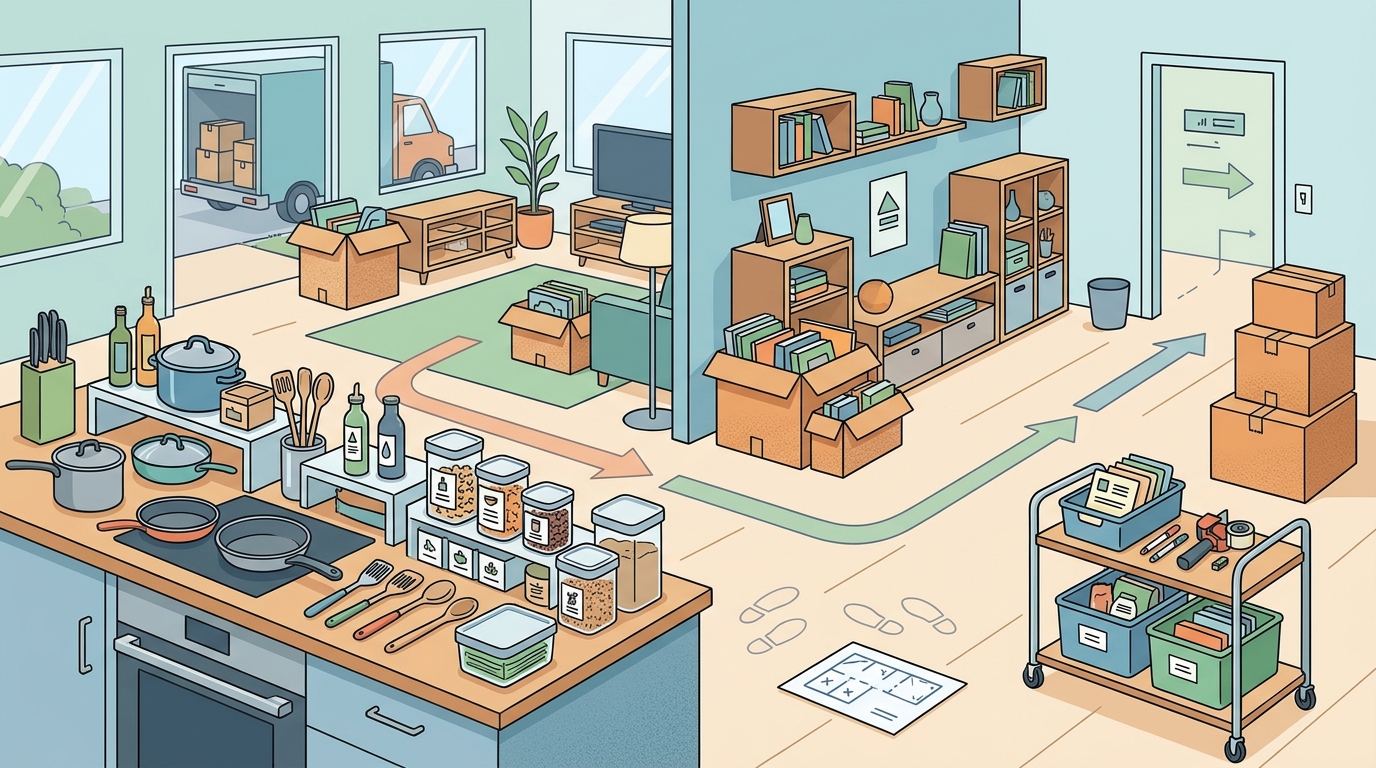
The best way to declutter your home before moving is to adopt a room-by-room strategy that prioritizes high-traffic areas first, such as the kitchen and living room. This method reduces visual chaos and creates immediate momentum. By focusing on one space at a time, you avoid the paralysis that often comes from looking at the entire house at once. This approach ensures that your most used spaces are ready for the move, making the transition smoother and less stressful for your household.
The Strategic Approach to Downsizing
Decluttering is the process of removing unnecessary items from your living space to create a more functional and organized environment. When preparing for a move, this process becomes critical because every item you keep adds to the cost and complexity of the relocation. A strategic approach involves assessing your new living space before you begin sorting. If your new home is smaller, you must be more aggressive in your culling. If the new space is similar in size, you can focus on quality over quantity. This pre-assessment prevents the common mistake of packing items that will not fit or serve a purpose in the new location.
Consider the concept of the "one in, one out" rule, but adapt it for moving. For every item you decide to keep, ask if it has a designated place in the new home. If the answer is no, it should be donated, sold, or discarded. This mental check forces you to be intentional. It shifts the mindset from "I have to move this" to "Do I need this?". This shift is the foundation of an efficient decluttering process.
Room-by-Room Execution
Executing a decluttering plan requires a systematic order of operations. Starting with the kitchen is often recommended because it is the heart of the home and contains the most fragile and numerous items. Begin with the pantry, then move to cabinets, and finally to appliances. As you clear each cabinet, sort items into three piles: keep, donate, and trash. This triage system keeps the process moving forward. Once the kitchen is done, move to the living room and bedrooms. This logical progression ensures that no area is overlooked and that you maintain a clear path through the house.
For bedrooms, focus on the closet first. Remove all items and sort them by category. This visual inventory helps you see exactly how much you own. It is often surprising to discover duplicates or items that have not been worn in years. By tackling the closet before the rest of the room, you create space to work. This physical space allows you to sort the remaining items on the floor without feeling cramped. The goal is to leave each room empty of clutter before you move on to the next.
Managing Emotional Attachments
Another strategy is to take photos of items you are letting go of. This digital archive allows you to keep the memory without the physical object. For example, if you are donating a piece of furniture that was a gift, photograph it and save the image in a digital album. This act of documentation can provide closure. It acknowledges the item's significance while freeing up physical space. This approach is particularly useful for items that are too large to store but too meaningful to discard.
When to Seek Professional Help
While many people can declutter on their own, some situations require professional assistance. If you are moving to a retirement community or downsizing significantly, the emotional and physical demands can be overwhelming. In these cases, a professional organizer can provide the structure and support needed to complete the process. They can help you make difficult decisions and manage the logistics of donation and disposal. This support is invaluable for seniors and their families, who may be dealing with grief or health issues alongside the move.
GGG Organizing specializes in helping clients navigate these complex transitions. Our team provides a judgment-free environment where you can make decisions about your belongings. We work with you to create a customized plan that fits your needs and timeline. Whether you need help with a single room or the entire house, we are there to support you. Our goal is to make the moving process as smooth and stress-free as possible. We understand that moving is one of life's most stressful events, and we are committed to alleviating that pressure.
Efficient Disposal and Donation
Once you have identified items to let go of, you need a plan for their disposal. Donating is a popular option, but it requires coordination. Many charities have specific pickup schedules and requirements. Research local organizations in advance to ensure that your items will be accepted. Some items, such as large furniture or appliances, may require special arrangements. Planning ahead prevents last-minute stress and ensures that your items are put to good use. This step is crucial for a clean and efficient move.
Selling items can also be an option, but it takes time. If you are on a tight deadline, selling may not be feasible. In these cases, consider consignment or estate sale services. These services can handle the marketing and sale of your items, saving you time and effort. They can also provide a fair market value for your belongings. This option is particularly useful for high-value items that you do not want to donate. By choosing the right disposal method for each item, you can maximize the efficiency of your decluttering process.
Key Takeaways
- Start with high-traffic areas like the kitchen to build momentum.
- Use a triage system of keep, donate, and trash to stay organized.
- Create a memory box for sentimental items to manage emotional attachments.
- Assess your new living space before deciding what to keep.
- Consider professional help for complex moves or significant downsizing.
- Plan for the disposal of unwanted items in advance.
- Take photos of items you are letting go of to preserve memories.
Frequently Asked Questions
How long does it take to declutter a house before moving?
The time it takes to declutter a house varies depending on the size of the home and the amount of clutter. On average, it can take anywhere from a few days to several weeks. A room-by-room approach can help you manage the process more effectively. It is important to set realistic goals and break the task into manageable chunks.
What should I declutter first?
It is generally recommended to start with the kitchen or living room. These are high-traffic areas that are used daily. Clearing these spaces first creates immediate momentum and makes the rest of the house feel more manageable. It also helps you establish a system that you can apply to other rooms.
How do I deal with sentimental items?
Create a memory box for each person in the household to hold a limited number of cherished items. You can also take photos of items you are letting go of to preserve the memory. This approach allows you to keep the emotional significance without the physical clutter.
Should I hire a professional organizer?
Hiring a professional organizer can be beneficial if you are overwhelmed or if you are downsizing significantly. They can provide the structure and support needed to complete the process. GGG Organizing offers customized services to help you navigate the moving process.
What are the best ways to dispose of unwanted items?
How can I stay motivated during the decluttering process?
Set small, achievable goals and reward yourself for completing them. Break the task into manageable chunks and focus on one room at a time. It is also helpful to have a support system, such as family or friends, who can help you stay on track.
Conclusion
Decluttering your home before moving is a critical step in ensuring a smooth and stress-free transition. By adopting a strategic, room-by-room approach, you can manage the process effectively and avoid the common pitfalls of moving. Remember to assess your new living space, manage emotional attachments, and plan for the disposal of unwanted items. If you need additional support, consider reaching out to a professional organizer. GGG Organizing is here to help you navigate this process with care and expertise. to learn more about how we can assist you with your move. Learn more: Services.